

My Mother-in-Law Got Pregnant at 52 to Pull My Husband Out of Our Marriage
After our wedding, we left for our honeymoon. That’s where things first started to unravel. Linda began calling David often. Every call sounded urgent. She said she felt unwell and needed him. During one call, she told him to come home immediately. We cut the trip short and returned early.
After our wedding, we left for our honeymoon. That’s where things first started to unravel. Linda began calling David often. Every call sounded urgent. She said she felt unwell and needed him. During one call, she told him to come home immediately.
We cut the trip short and returned early. After that, every attempt to travel followed the same pattern. A call. A complaint. David going back. I suggested hiring a nurse so Linda could get help without relying on her son. Linda refused.
My name is Anna. I’m 28, newly married, and home with a newborn. My husband, David, is 30. His father left when he was a baby, and Linda raised him alone. From childhood, David learned to feel responsible for her.
We live in a house Linda bought years ago “for her son.” Officially, it’s our home, but she never let us forget she owned it. After the wedding, every plan we made revolved around her condition. If Linda felt unwell, everything else stopped.
When she refused help from a nurse, I realized this wasn’t just about health. Linda said she was expecting at 52 and moving in with us. I couldn’t object. The house was hers.
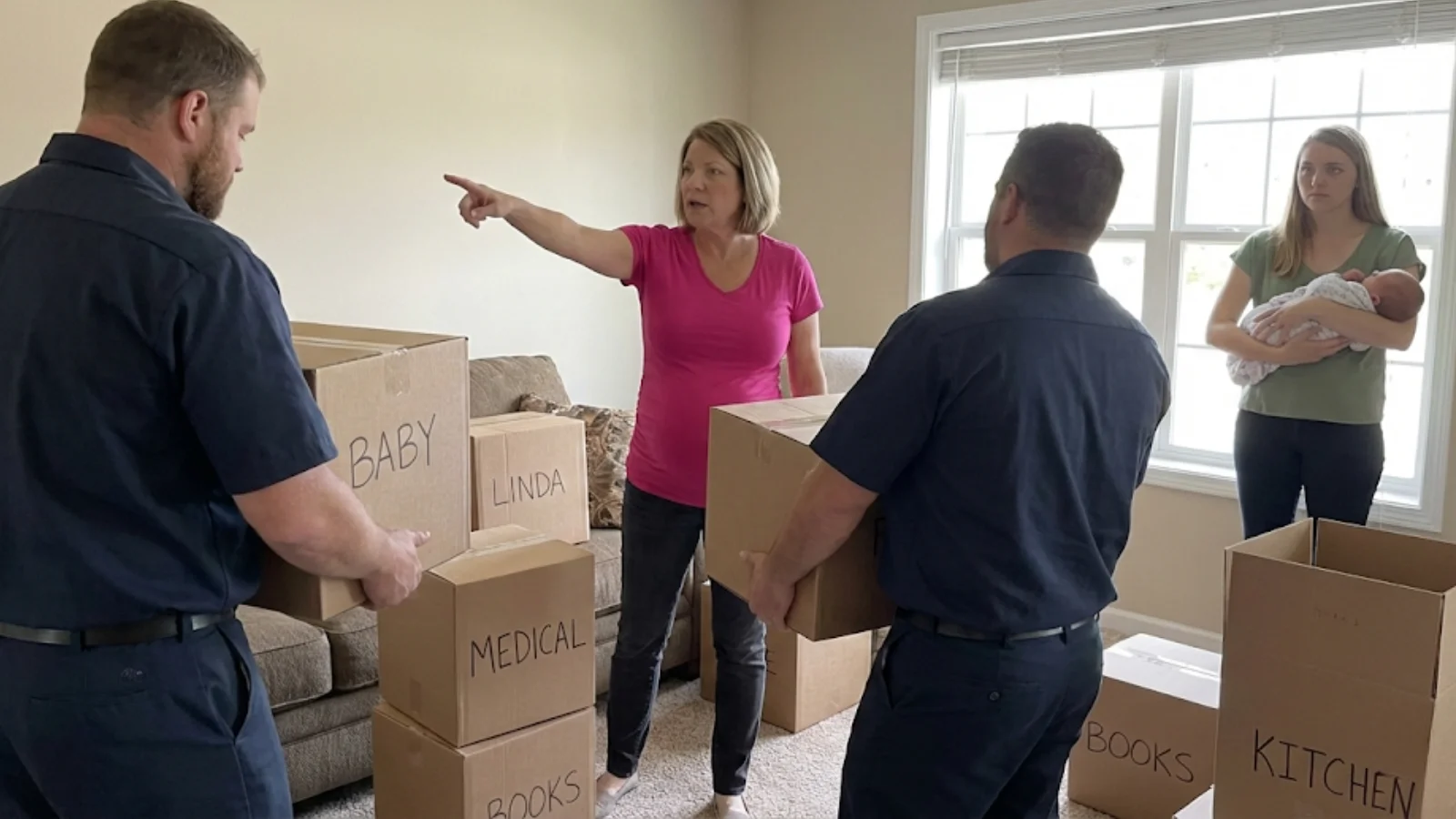
Once Linda moved in, the house stopped feeling like ours. She didn’t ask. She decided. She rearranged furniture, cleared closets for her “needs,” and threw my belongings away. I found clothes and personal items in the trash, explained as making room for the baby.
Every day came with criticism. I held the baby wrong. Fed wrong. Put the baby to sleep wrong. Linda gave advice without being asked and reminded me she raised her son alone and knew better. Around David, she was kind. When he wasn’t there, she made it clear she thought I was a bad mother.
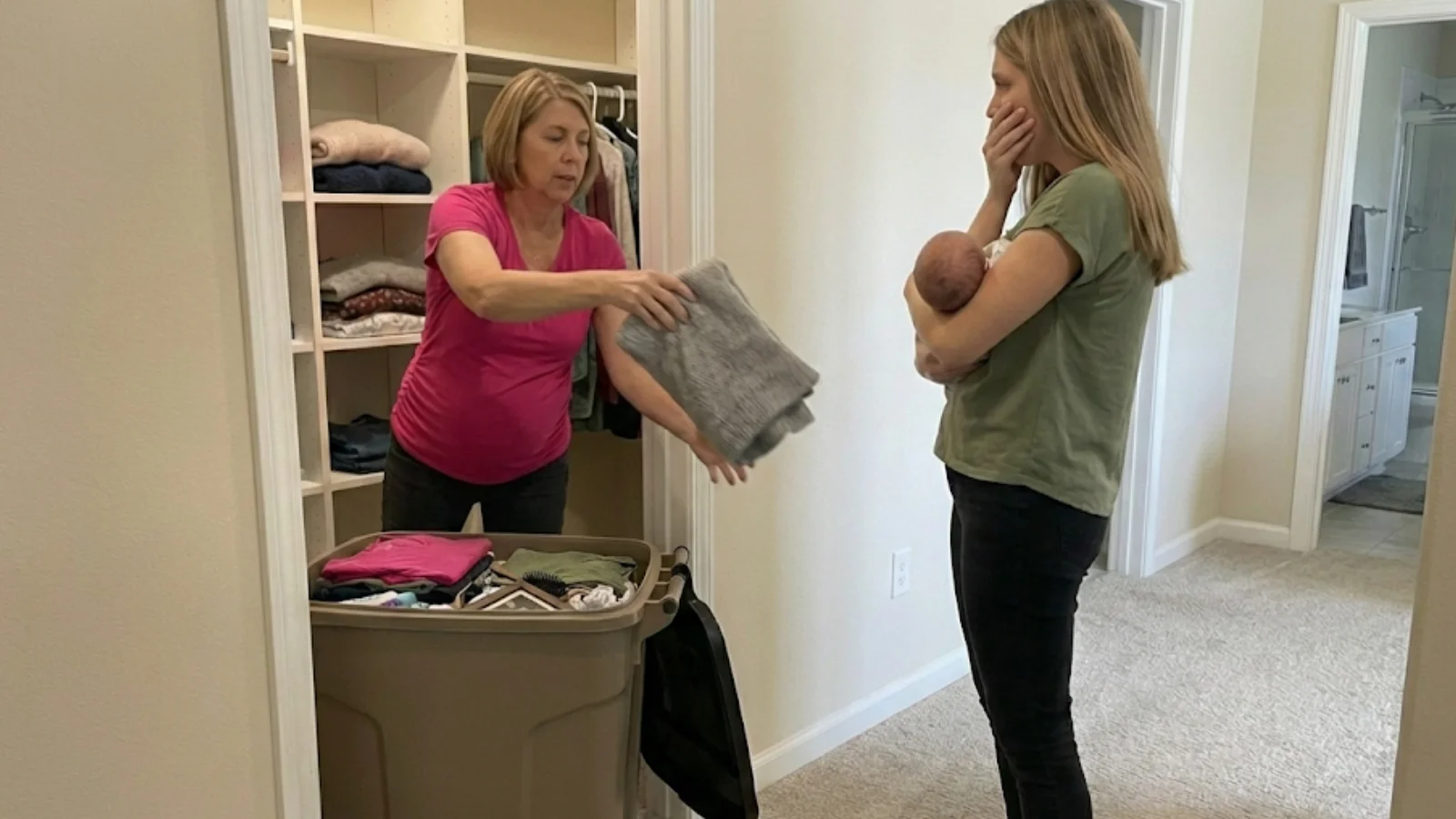
She constantly reminded me the house belonged to her. David tried to keep the peace and increasingly stood between us, but never on my side. The first crack appeared when I understood one thing. Linda would not accept help unless it came from my husband.
The first trigger wasn’t dramatic. It was quiet. I realized no one had ever seen the father of Linda’s “baby.” There was no name, no story, no one who could confirm he existed. When I asked carefully, Linda gave the same answer every time.


It happened by accident. The man got scared. He disappeared. The conversation always ended there. She shifted the focus back to how hard things were for her. A few days later, she showed David printed medical records. She held them like final proof.
I noticed details that didn’t sit right. Generic wording. No doctor’s last name. No contact information.
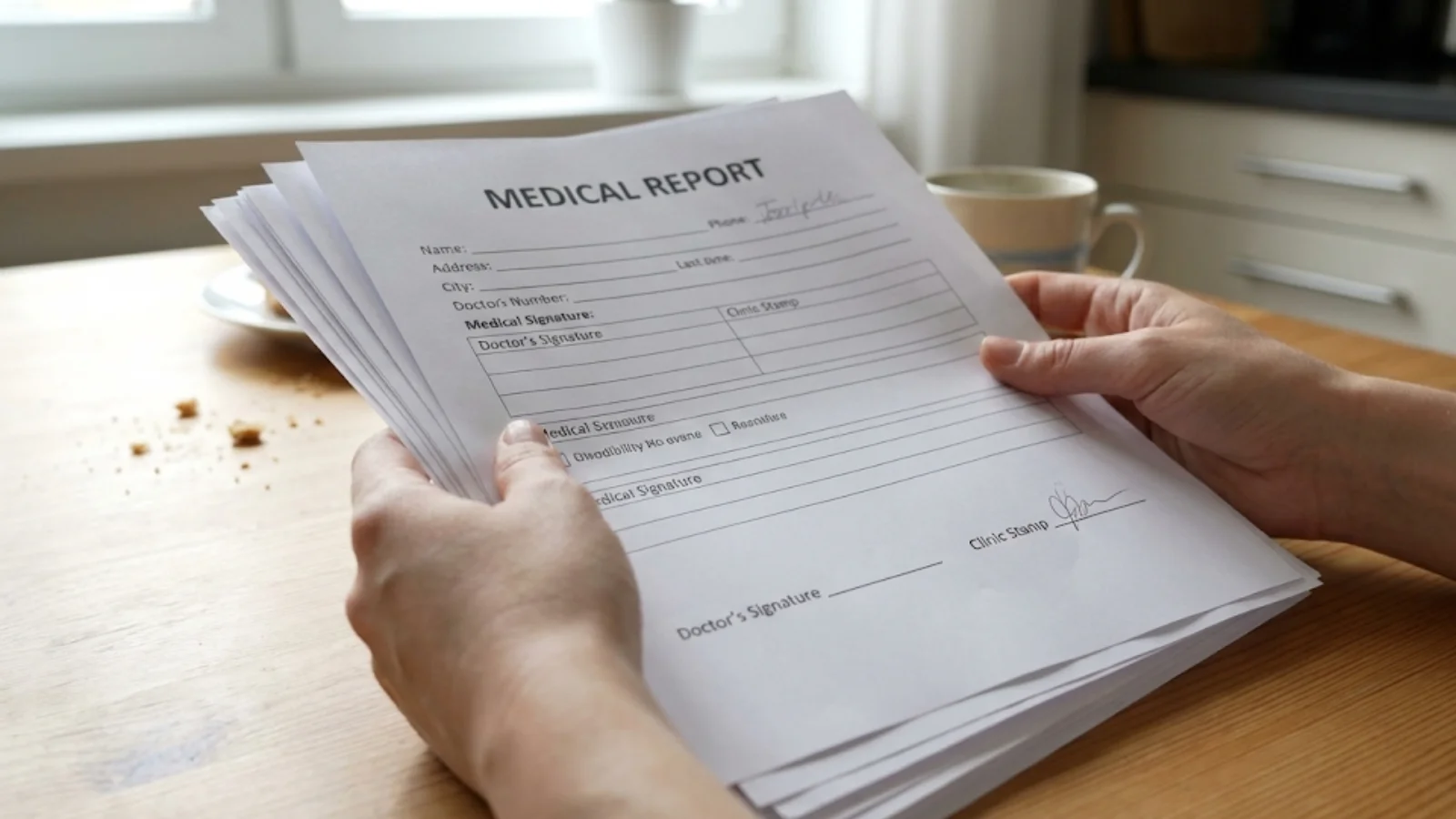
This wasn’t an accusation yet. Just something that didn’t add up. I didn’t tell David. I didn’t argue. I decided to check quietly. Because if I was wrong, the cost would be high. And if I wasn’t, even higher.
I started noticing patterns. Almost every one of Linda’s “health scares” lined up with our plans. A quiet evening. A weekend away. A moment when we felt like a family. Linda became softer around David and harsher with me. She said I was overly emotional after giving birth.
That I was imagining things. Sometimes she apologized, but in a way that shifted blame. She called relatives while I was nearby and spoke about how hard things were for her and how distant I’d become. David began repeating her words. He said I was jealous. That this wasn’t the right time. That I needed to endure it.
That’s when I understood. Linda wasn’t fighting for help. She was fighting for control. The risk became clear. David was on the side of his expecting mother. He said I was overreacting and letting jealousy guide me.
The house belonged to Linda. I wasn’t working. I had a newborn. One wrong move could leave me without a marriage or a place to live. So I stopped arguing. I didn’t need another conversation. I needed proof.
That day, I came home about three hours earlier than usual. My baby’s appointment ended sooner, and I drove home without telling anyone. The door wasn’t locked. I walked in. Linda was sitting on the couch, watching TV. Calm. Comfortable.
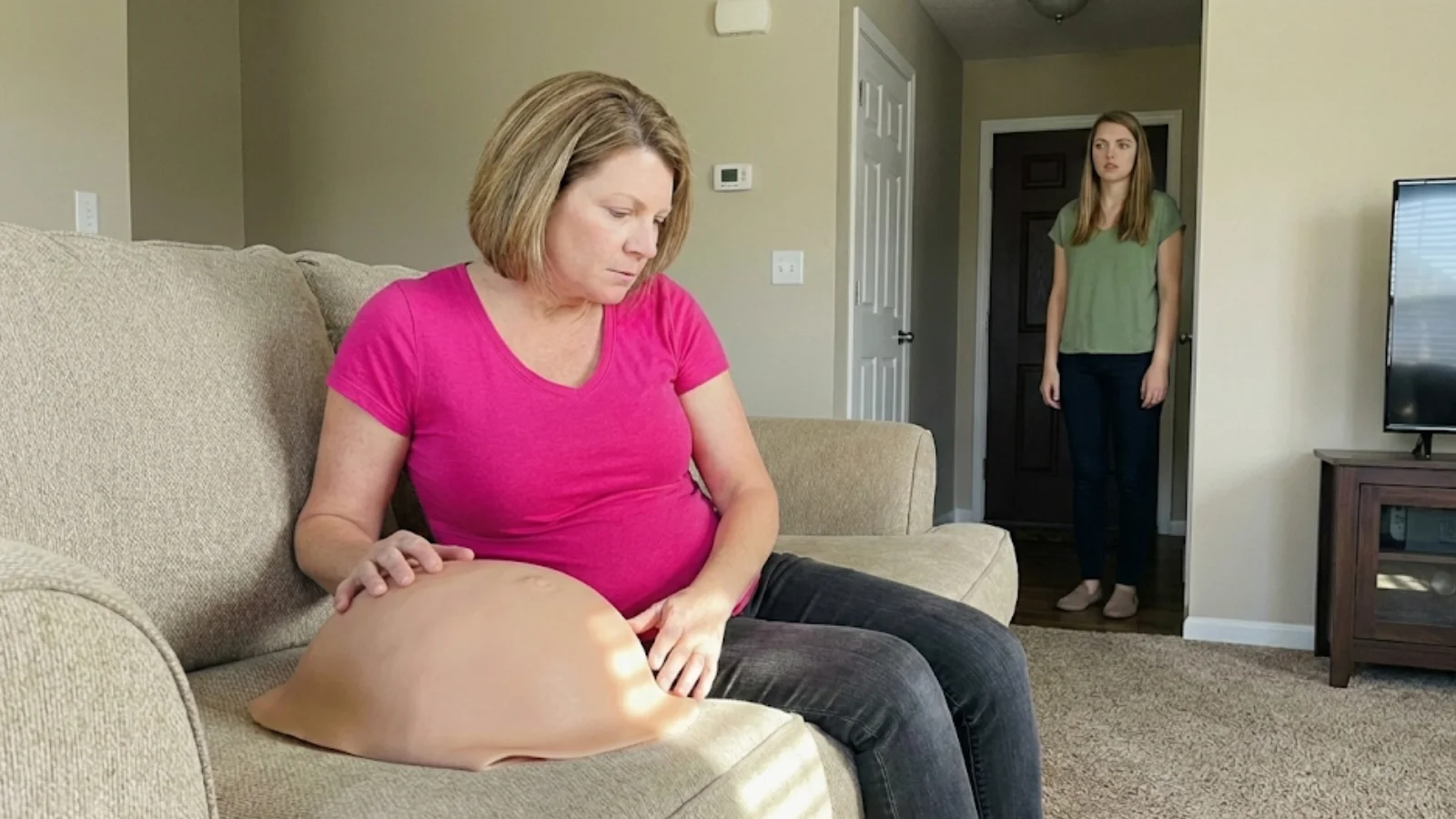
I paused. There was no expecting belly. I looked at the couch beside her and saw it. A fake belly, resting there like something casually taken off.
Linda knew immediately that I had seen it. Neither of us spoke.
You can see this in the series Bride Under Arrest, where what everyone believed to be real turns out to be fake, and a carefully staged lie unravels in a single, undeniable moment.
I left and only felt my hands shaking once I was in the car. That evening, I showed David the photo and told him everything. The clinic call. The paperwork. The patterns. Linda tried to talk. But this time, words didn’t work.
After that, decisions came quickly. Linda no longer lived with us. Contact was limited to rare family gatherings in neutral places. David stopped reacting to urgent calls and demands. He stopped canceling plans and, for the first time, set boundaries. It wasn’t easy. He struggled with guilt.
I struggled too. Not with the truth, but with how long I stayed silent out of fear of losing my home and support with a newborn. Our marriage didn’t become easier. But it finally became ours. If you depended on housing and your partner, would you risk everything for the truth or stay silent to survive?
Related Posts

The 4-Year Curse: My Son Finally Learned Why I Seemed Like a Strict Karen
My Son Called Me a Karen and Moved Out – 4 Years Later He Learned the Scary Reason I Was So Strict

I Thought My Wife Was Being Unfaithful. Then Her Cancer Doctor Called.
I Filed for Divorce After Finding Hotel Receipts and a Secret Phone – Then the Oncologist Looked at Me and Said My Partner Was Not Unfaithful, She Was Very Sick

I almost left the man who built my dream house
I Thought My Husband Was Seeing Someone Else for Months After Finding Hotel Receipts and Missing Money – When I Was Ready to Leave Him, He Took Me to a House I Never Knew Existed

My Wife Has Given a Dollar to Every Homeless Person She's Ever Passed — Last Week, a Lawyer Knocked on Our Door and Said She'd Inherited a Stranger's Entire Estate
Last Tuesday evening a lawyer stood on my porch and told me my wife of eleven years had just inherited an entire estate from a man who had passed away, someone we had never heard of. For one terrifying second I thought it was a scam, or worse — some kind of lawsuit we couldn’t afford. Then he said the man’s name: Walter Fitch. And my wife Renee started crying before she even opened the letter.