

My Mother-in-Law Left $500,000 to Her “Real” Grandchildren. My Adopted Son Got Nothing.
We were sitting in the lawyer’s office when we found out. My hands wouldn’t stop shaking. Our son Sam is ten. He has chronic kidney disease, and our life basically revolves around doctor appointments and medical bills.
We weren’t expecting some huge inheritance, but I won’t lie — we were hoping for help. We’re hardly keeping up with therapy costs as it is. The lawyer started reading.
“To my biological grandchildren, I leave one hundred thousand dollars each.”
I felt my stomach drop as he kept going down the list. Then he paused.
“And to Samuel… I leave this wooden toy house.”
He slid this small, dusty, hand-carved house across the table. That was it. Just this little wooden thing that honestly looked like it had been sitting in storage for twenty years. My sister-in-law, Karen, let out a sharp, jagged laugh.
“Well, look at that, Sam!” she smirked, clutching her check. “Grandma left you a whole house after all!” Her husband laughed with her.
Sam was staring at that little toy like it was something special. He was smiling, turning it over in his hands, completely unaware of what had just happened.
I was about to stand up and get us out of there when he leaned closer and whispered,
“Mom, something’s moving inside the house. Look.”

Margaret always hid behind Bible verses, talking about “universal love,” but she was obsessed with the “Miller bloodline.” We weren’t asking for a handout. Robert and I both worked double shifts — he at the garage, me at the clinic — just to keep up with Sam’s dialysis treatments.
Six months ago, when the first transplant window opened, we thought that was our miracle. We swallowed our pride and asked Margaret for a loan. She didn’t even look up from her knitting.
“I’m not spending my legacy on… uncertainties,” she said it in front of everyone.
I don’t think I’ve ever felt that angry. I was exhausted from working two jobs, and there she was, reminding him — again — that he wasn’t really family. A few weeks later, the hospital told us an anonymous donor had covered the transplant deposit.
We didn't know who it was. That operation went through. It saved his life. But recovery hasn’t been simple. Now Sam needs a second procedure — a corrective operation tied to complications from the transplant — and insurance isn’t covering most of it. That’s where we were drowning again.
At the time, I thought Margaret was just cruel. I had no idea that her “no” might have meant something else.
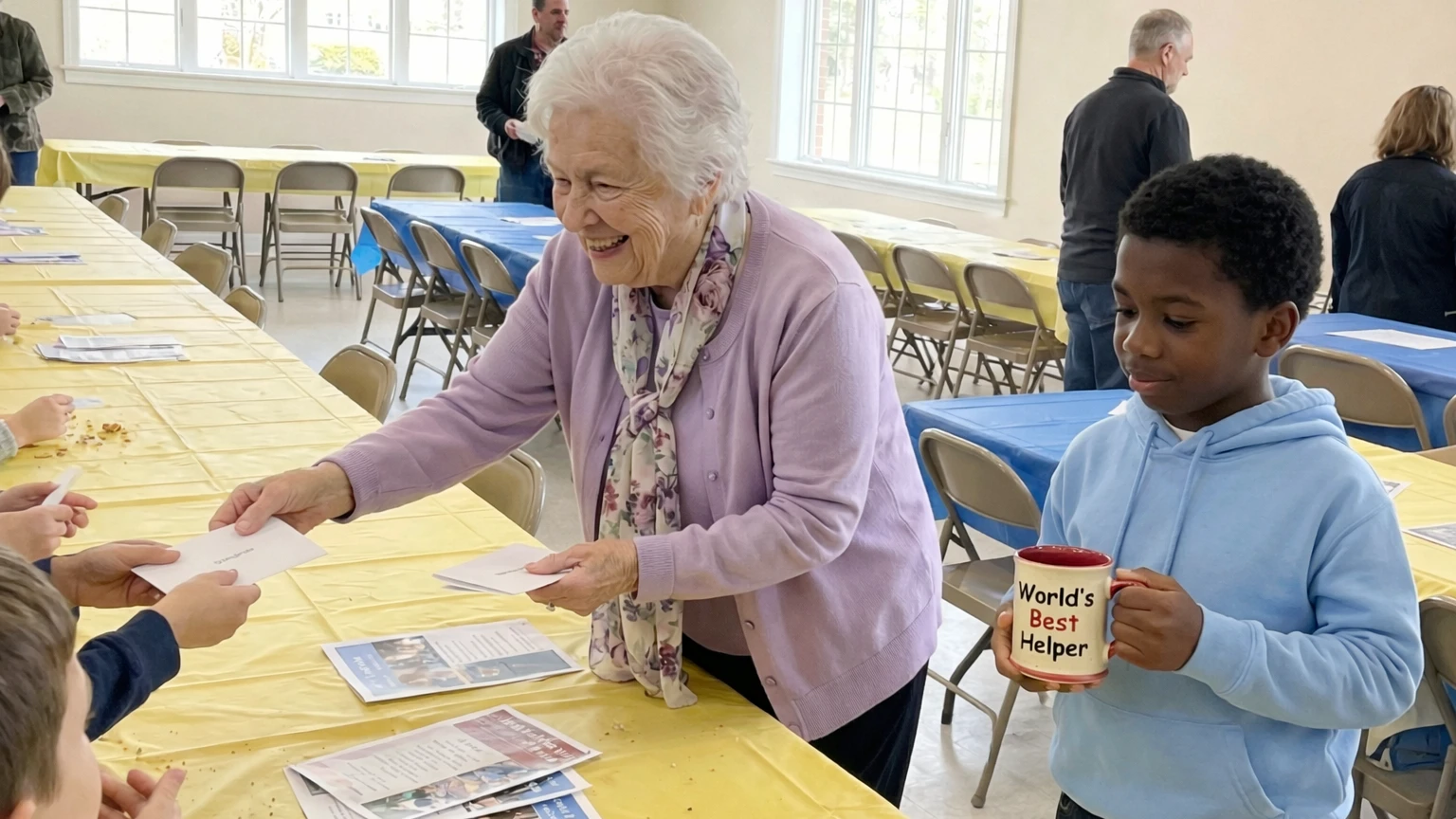
Karen was practically glowing. She’d spent years hovering around Margaret, and now it paid off. “A wooden hut for the little helper!” she laughed, waving her $100,000 check around. I braced myself for Sam to finally understand.
I thought this would be the moment it hit him. But it didn’t. He reached out with his thin little hands and pulled the toy toward him like it was something special. He smiled.
“She remembered,” he said quietly. “This was my favorite one on her shelf.”
That hurt more than anything Karen said. He was the only person in that room who wasn’t thinking about money. Karen’s husband leaned over and said, “Careful, Sam. Don’t spend it all in one place.” Sam didn’t even react.


He was focused on the toy, running his thumb along the edge of the roof like he was studying it. Then we all heard it. A heavy clunk from inside the wood. Not a rattle. Not something loose. Something solid.
I looked up at the lawyer. He suddenly wouldn’t look at me. And that’s when I realized Margaret might not have left what everyone thought she did.

We didn’t even wait until we got home. Robert pulled into a gas station parking lot because neither of us could sit still. His hands were shaking so badly he almost dropped the screwdriver.
I lifted the roof off the little wooden house and something heavy fell into my lap. A key. Then a folded letter. It smelled faintly like Margaret’s lavender soap. Robert read it out loud because my hands wouldn’t cooperate.
“To my only grandson who didn’t look at me like a bank account. If I put this in the will, they would’ve dragged you through court for years. They would’ve tried to take it" the letter said.
"I also made sure the first transplant went through. The hospital listed it as anonymous for a reason.”
Robert stopped reading and looked at me. The anonymous donor. It wasn’t a stranger. It was her! The key was for a private vault downtown. Inside was a cashier’s check for $300,000. It had been issued months ago. The memo line said “Medical Gift.”
It was separate from the estate. Completely separate. I just sat there staring at it. I didn’t cry right away. I think I was in a daze. Then my phone started buzzing. Karen.
“I saw the lawyer’s face, Sarah. What was in that toy?” she demanded.
“He mentioned some kind of private annex he couldn’t disclose. If she hid money in there, it belongs to the estate. It belongs to the bloodline.”

Within minutes the family group chat lit up.
“Give it back.”
“We’ll see you in court.”
“You’re not using our mother’s money for a kid who isn’t even a Miller.”
Sam’s operation isn’t even scheduled yet. And they’re already talking about lawsuits. I looked at the check. Then at the key. We finally had the money for his treatment. But it was clear this wasn’t over.
You can see this in Unholy Vows, where devotion and faith are used as moral cover — while exclusion is quietly justified as tradition and obedience to “how things are done.”
They didn’t even wait until the next day. That evening, someone started pounding on our front door so hard I thought it might crack. It was Karen and her husband. Karen didn’t even say hello. She pushed her way inside and went straight to the kitchen.
“The lawyer called,” she said. “That ‘gift’ is estate fraud.” Her voice was shaking, but not from sadness.
“You manipulated her,” she snapped. “You pressured a sick older woman to give you money for your charity case.”
I just stared at her. Sam was in the next room. And she was shouting about bloodlines and inheritance like this was some kind of business dispute — not a child’s operation. Something in me just snapped.

I didn’t back down. I held up the $300,000 check so she could see it clearly.
“She did this because she knew exactly how you’d react,” I said. My voice was shaking, but I didn’t stop. “You’d rather argue over money than make sure he’s okay.”
Robert stepped forward and stood between them and the doorway.
“You need to leave,” he said. Calm. Firm. “And if you really want to sue over this, be ready to explain in court why you’re trying to take money meant for a kid’s operation.”
Karen just stared at us. Her face went red. Not sad. Not hurt. Just angry. That’s when it hit her. This wasn’t part of the estate. It wasn’t something she could demand. And for the first time, she didn’t have control over it.

Three weeks later, Sam was in recovery. The color was finally back in his face. The operation worked. The situation with the family, though? Total disaster. We changed our phone numbers. Blocked anyone who sent threats or started talking about a “fair share.”
But my son is here, he is fine. And that’s enough.
Related Posts

The 4-Year Curse: My Son Finally Learned Why I Seemed Like a Strict Karen
My Son Called Me a Karen and Moved Out – 4 Years Later He Learned the Scary Reason I Was So Strict

I Thought My Wife Was Being Unfaithful. Then Her Cancer Doctor Called.
I Filed for Divorce After Finding Hotel Receipts and a Secret Phone – Then the Oncologist Looked at Me and Said My Partner Was Not Unfaithful, She Was Very Sick

I almost left the man who built my dream house
I Thought My Husband Was Seeing Someone Else for Months After Finding Hotel Receipts and Missing Money – When I Was Ready to Leave Him, He Took Me to a House I Never Knew Existed

My Wife Has Given a Dollar to Every Homeless Person She's Ever Passed — Last Week, a Lawyer Knocked on Our Door and Said She'd Inherited a Stranger's Entire Estate
Last Tuesday evening a lawyer stood on my porch and told me my wife of eleven years had just inherited an entire estate from a man who had passed away, someone we had never heard of. For one terrifying second I thought it was a scam, or worse — some kind of lawsuit we couldn’t afford. Then he said the man’s name: Walter Fitch. And my wife Renee started crying before she even opened the letter.