

My Parents Found Out I Was Pregnant, Pulled Me Out of School, and Decided My Baby Would Be Introduced to Our Church as Their Child - While I Stayed in the Same House as a “Sister.”
My name is Maya Reynolds. I became a mom at 17. I want to raise my child on my own and be the best mom I can be. But I don't have the money to move out. I live with my parents. My parents—Thomas and Elaine Reynolds—are very religious, socially conservative, and care a lot about what others think. We are part of a close church community where people are friendly but also curious. Stories are believed if they seem nice enough.
They found out I was pregnant at around thirteen weeks. There was no yelling. No crying. No panic. My mother asked who knew. My father asked if anyone outside the house had seen changes. When I said no, they exchanged a look that felt like relief.
That was the moment I understood this wasn’t about my health or my future. It was about control. My mother said, “People don’t need to know who gave birth.” She said it like she was explaining etiquette, not erasing me.
I opened my mouth to argue, but my father spoke first, calm and final: “You will still live here—but you will not be introduced as the mother.” In that moment, I realized they weren’t trying to hide a pregnancy. They were trying to REASSIGN IT.
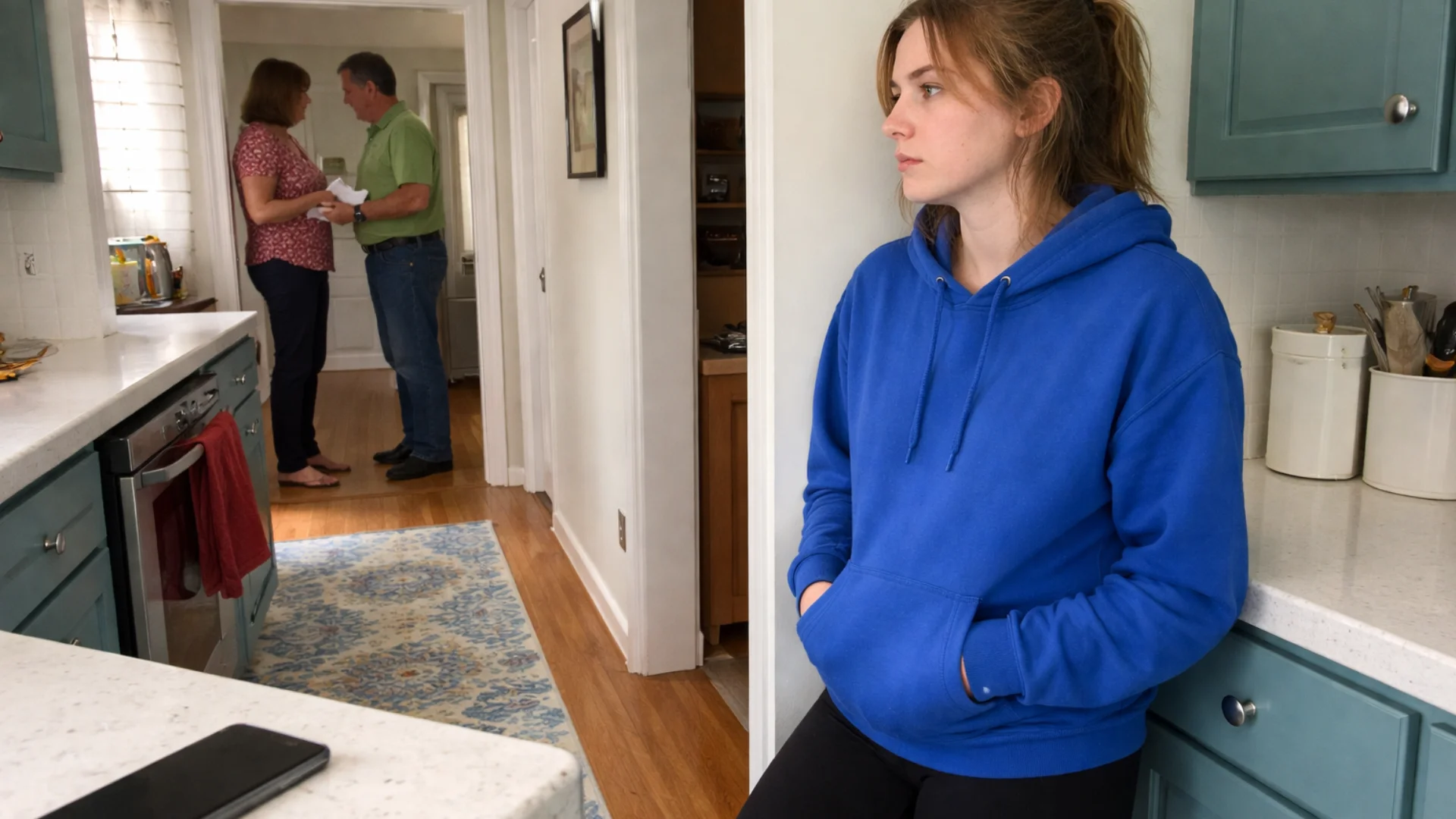
The day they found out, my mother didn’t cry. She asked who knew. I said no one. My father nodded once and said, “Good.” That night, my phone stayed on the kitchen counter. My bedroom door no longer locked. My schedule changed without discussion. Two days later, I was pulled out of in-person school.
My mother handled the enrollment paperwork for an online religious program. My father told me it was temporary. They said finishing early would be “a blessing.” What it really did was remove me from adults who might notice changes. No teachers. No classmates. No questions. I stayed home. That was the goal.
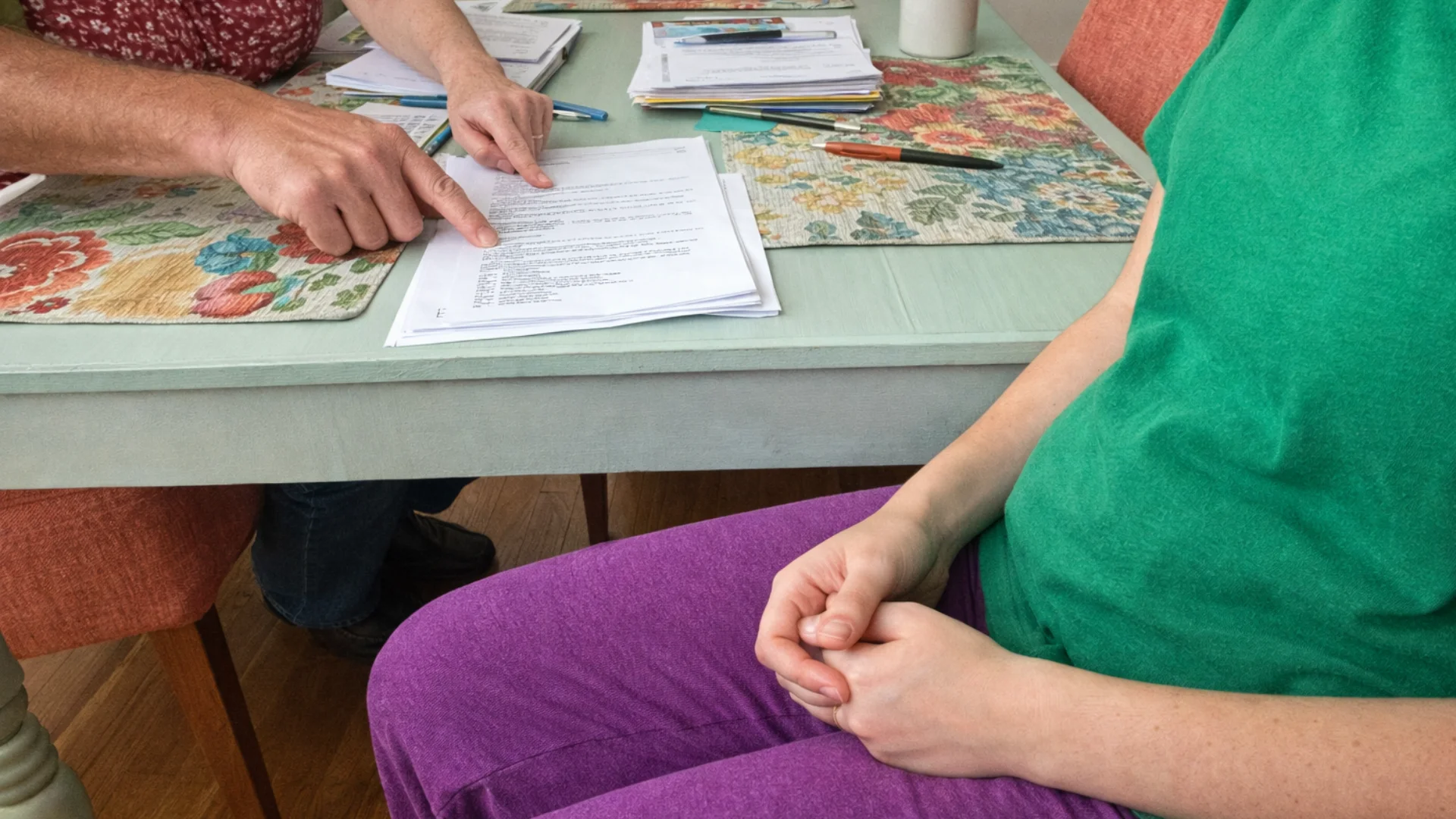
They explained the rules slowly, like they were doing me a favor. No posting photos. No leaving the house alone. No telling extended family. No telling church friends. My mother said, “People don’t need to know private matters.”
My father said, “Obedience keeps families intact.” They warned me—calmly—that staying in the house required cooperation. Housing wasn’t promised. It was CONDITIONAL. The baby items came before the conversation. A crib arrived and went straight into my parents’ bedroom. Not mine.
My mother said it made sense “for nighttime help.” She bought neutral baby clothes and folded them herself. She didn’t ask what I liked. She didn’t ask what I wanted. She labeled drawers. She took control.
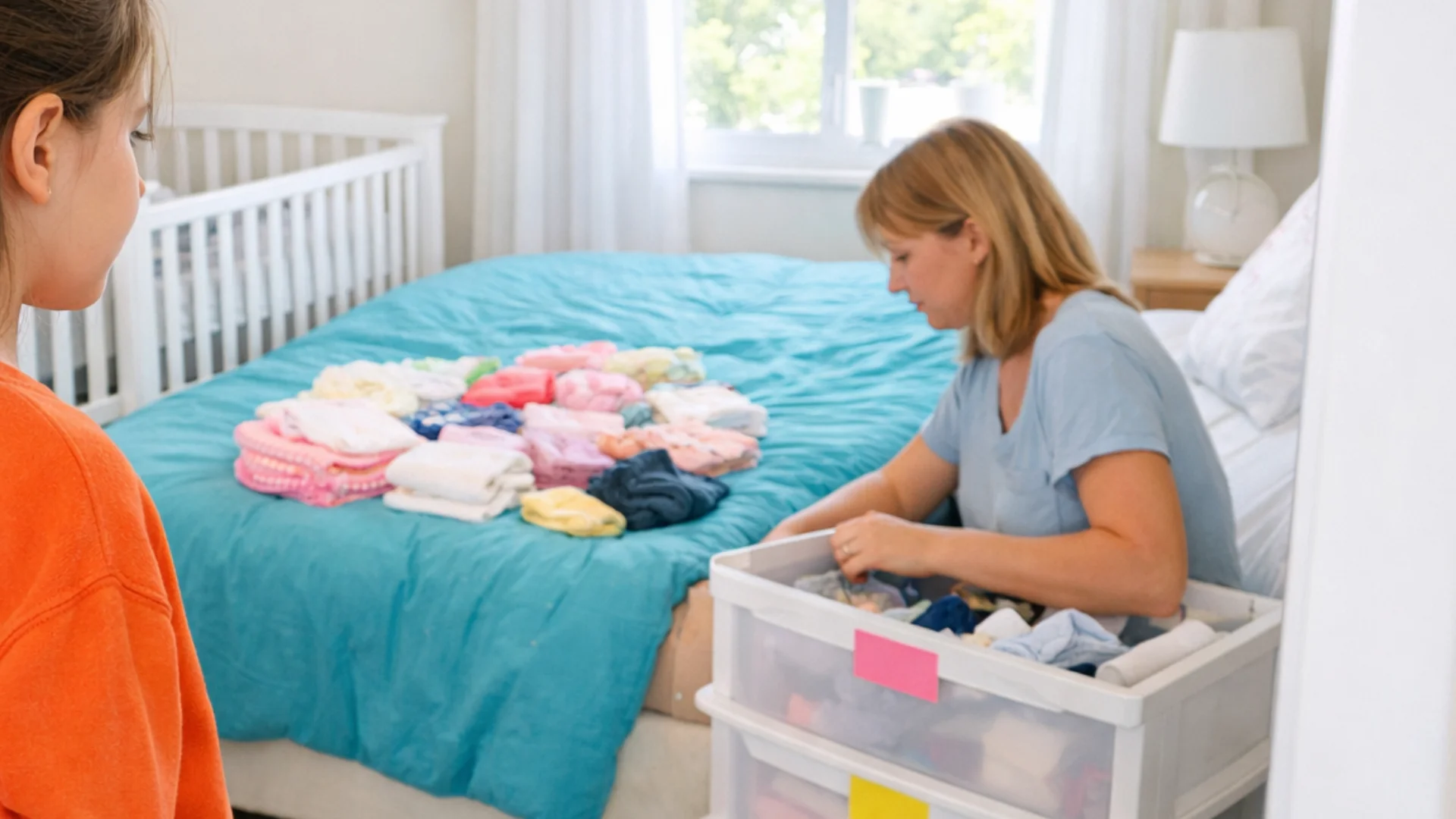
Then I started hearing her practice lines out loud in the living room. “We never expected this blessing.” “At our age, God surprised us.” “His timing is perfect.” She never said grandchild. She never said Maya. That’s when I understood: they weren’t hiding my pregnancy. They were REWRITING IT.
The fake belly appeared on a Sunday. She came downstairs wearing a loose dress and padding underneath. She stood in front of the mirror and adjusted it until it looked real. My father watched without comment. I was told not to come to church. “You’re not feeling well,” my mother said. “Rest is important.”


From the upstairs window, I saw her walk to the car holding her stomach the way people do when they want attention without asking for it. When they came home, there were smiles. That week, people stopped by. Cards arrived addressed to MY PARENTS. Small gifts. Blankets. Baby socks. No one asked where I was.
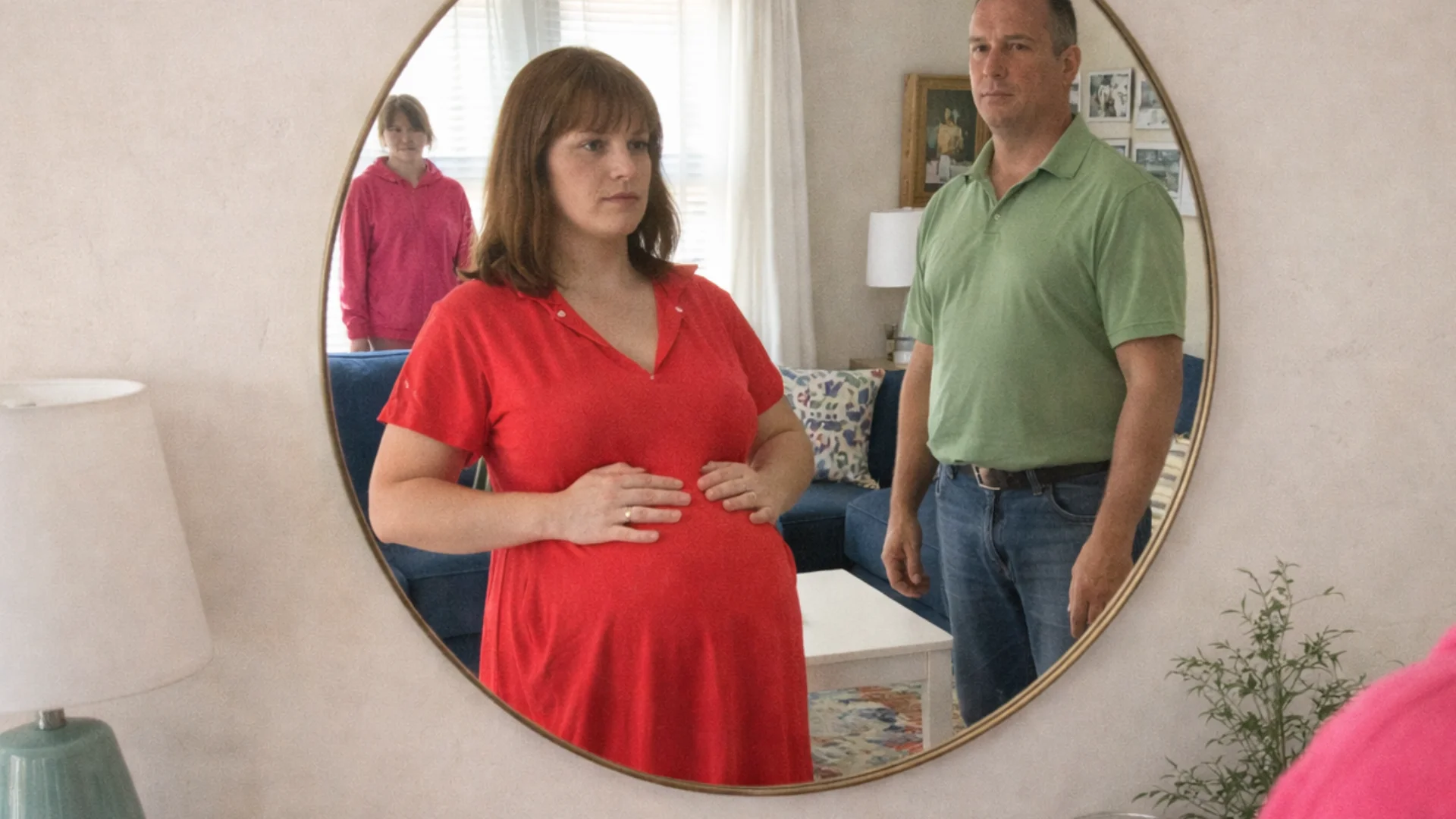
I stopped leaving the house. Not because I was forbidden. Because it was SAFER not to be seen. If I went outside, someone might notice my body. Someone might connect timelines. Someone might ask why my mother looked pregnant while I was hidden upstairs. So I stayed in my room. Meals were brought to me.
Appointments were scheduled without my input. My mother attended every visit and answered questions meant for me. My father started talking about the baby like it was a shared project. “When the baby comes, we’ll set a routine.” “We’ll handle nights.” “We’ll need consistency.” They didn’t ask what I planned to do. They assumed my role was support.
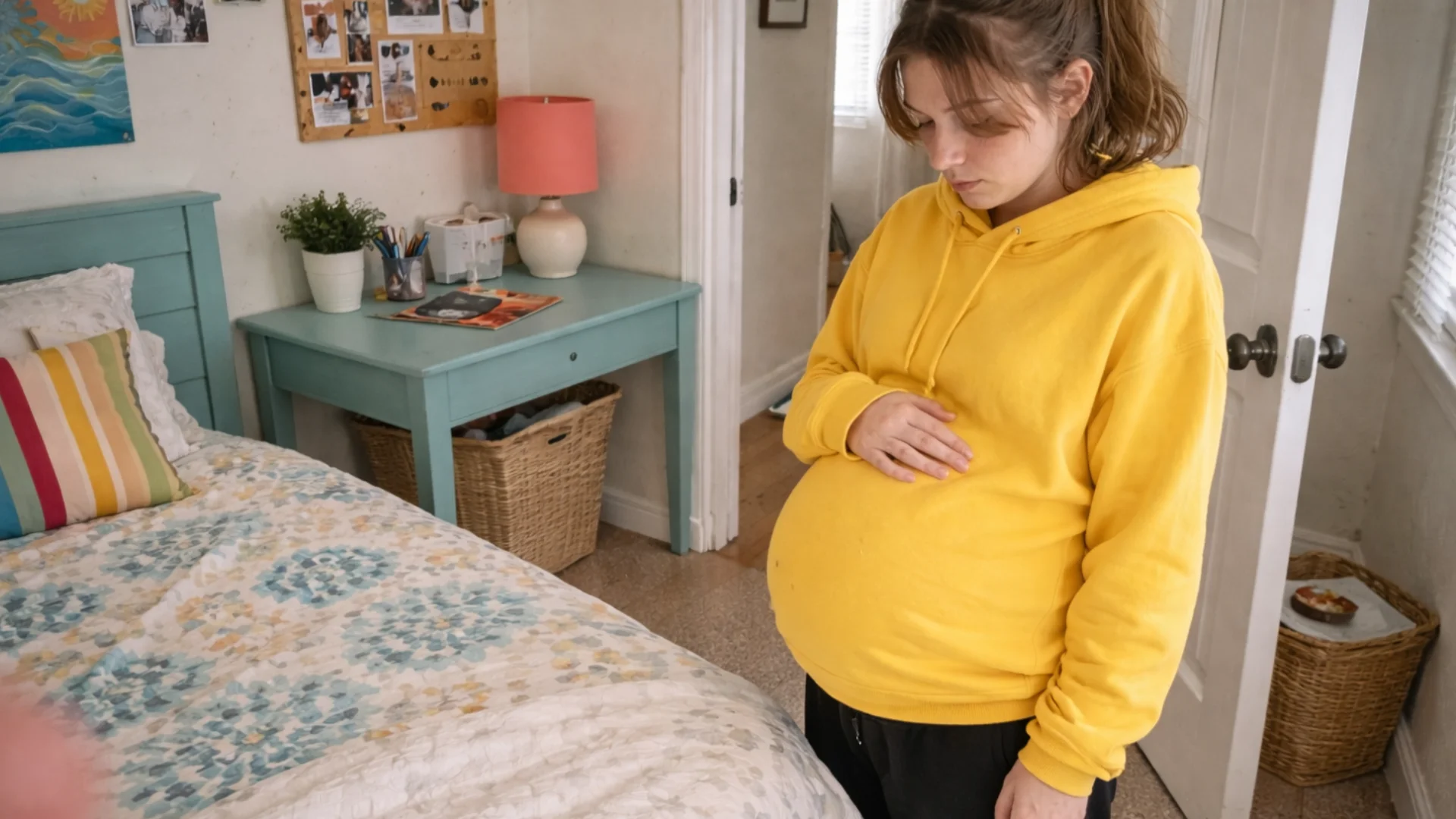
Furniture moved. A nursery formed downstairs. My room became quieter, smaller, further away. My parents started saying “our baby” out loud. Not correcting themselves. Not lowering their voices. When I said, “I’m the mother,” my mother smiled tightly and said, “You’ll always be part of this.”
That sentence had NO TITLE in it. I wore oversized clothes inside my own house. Long hoodies. Loose shirts. My mother commented if fabric clung too much. “People notice things,” she said.
As if people were already watching. She wore the fake belly more often. Grocery store. Church meetings. Quick stops. She held it with both hands like a practiced gesture. My father stood beside her like this was normal. They were SELLING THE STORY.
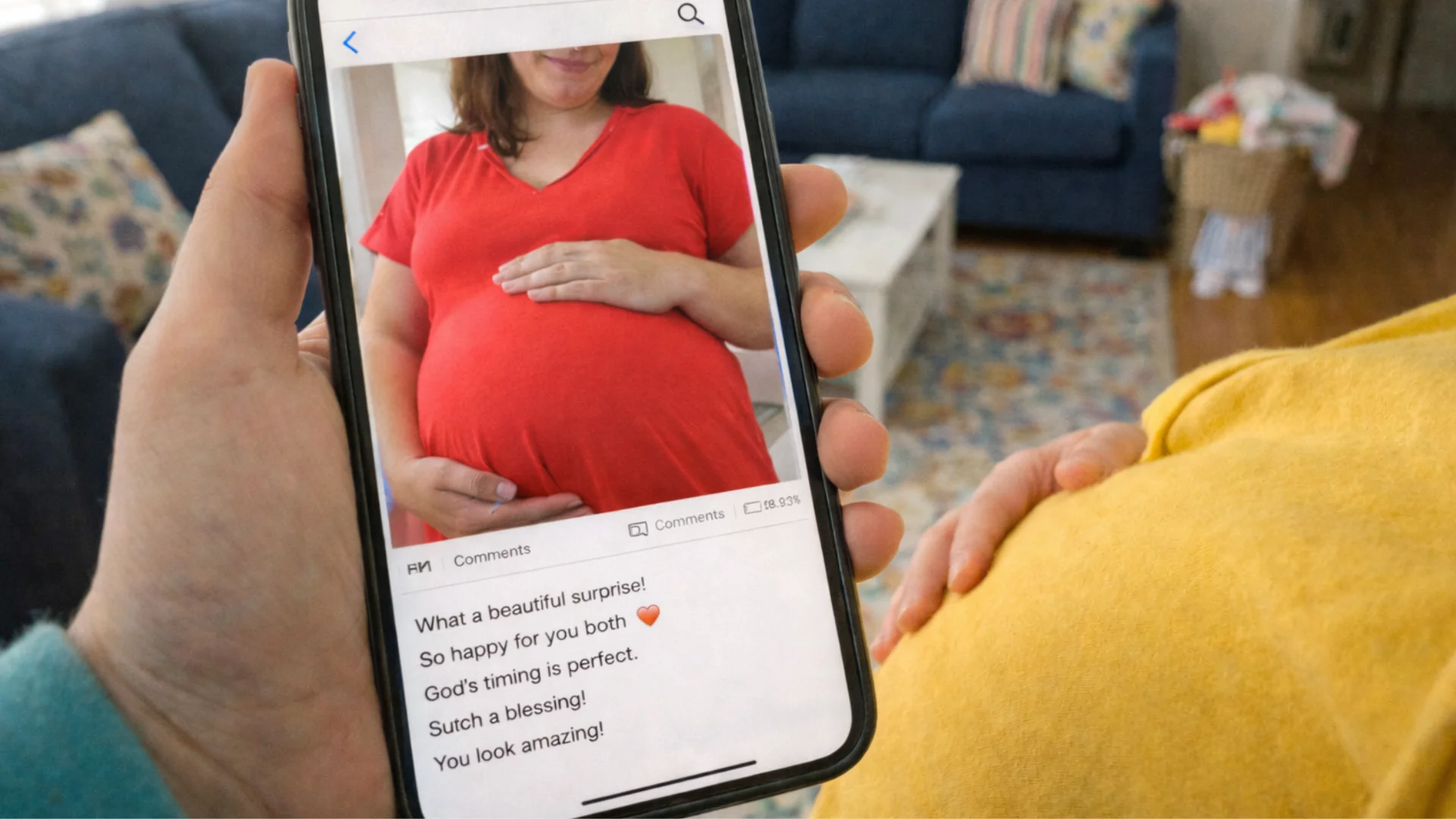
As the due date got closer, everything sped up. My parents announced the pregnancy more openly—but selectively. Just enough people to anchor the narrative. My mother posted a photo online. Cropped tight. Just her face and the belly.
Comments filled the screen. “Miracle.” “Blessed.” “So beautiful.” I wasn’t in the frame. Inside the house, they argued over names. Over schedules. Over feeding routines. They didn’t include me. They didn’t need my agreement. They relied on my DEPENDENCE.
I thought about leaving. Then I thought about money. About nowhere to go. About being pregnant and sleeping in a car. My parents knew this math. They never said “homeless.” They didn’t need to. Their calm made the threat clearer. Stay quiet. Stay housed. Speak up. Lose everything.
You can see this in Bride Under Arrest, where freedom isn’t taken by force — it’s controlled through leverage, dependence, and quiet ultimatums that trap someone inside a role they never chose.
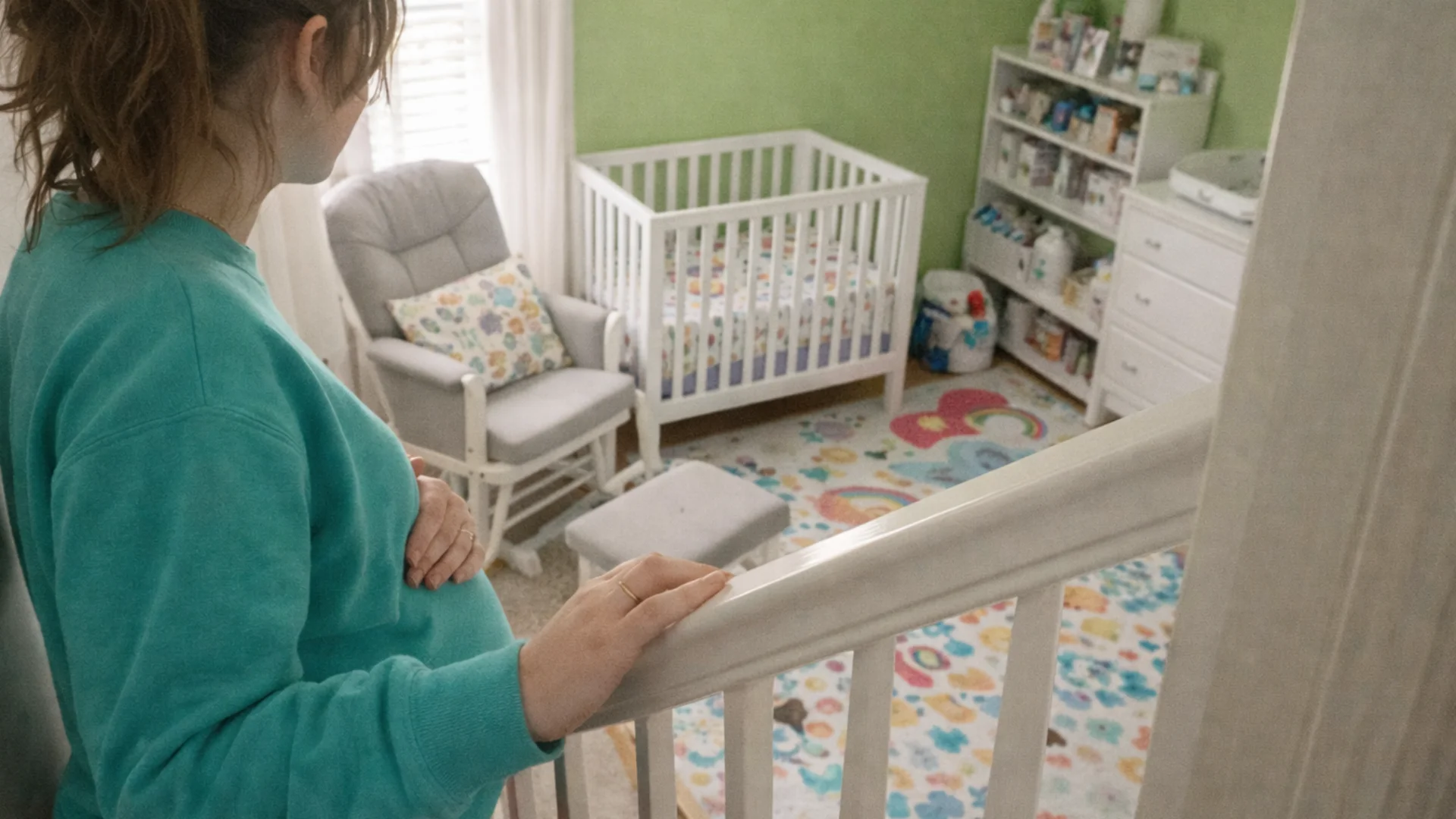
I still live here. I still depend on them. Downstairs, a nursery waits for a baby everyone believes belongs to my parents. My mother doesn’t wear the fake belly anymore. She doesn’t need it. The story already works. People don’t ask where I’ve been. They ask how SHE is feeling.
And every day I stay in this house, the line between MY CHILD and THEIR STORY gets thinner. If you were in my position—pregnant, dependent, living under parents who control housing, money, and reputation.
Would you accept being erased as the mother to keep a roof over your head…Or would you risk everything to keep your NAME attached to your own child?
Related Posts

The 4-Year Curse: My Son Finally Learned Why I Seemed Like a Strict Karen
My Son Called Me a Karen and Moved Out – 4 Years Later He Learned the Scary Reason I Was So Strict

I Thought My Wife Was Being Unfaithful. Then Her Cancer Doctor Called.
I Filed for Divorce After Finding Hotel Receipts and a Secret Phone – Then the Oncologist Looked at Me and Said My Partner Was Not Unfaithful, She Was Very Sick

I almost left the man who built my dream house
I Thought My Husband Was Seeing Someone Else for Months After Finding Hotel Receipts and Missing Money – When I Was Ready to Leave Him, He Took Me to a House I Never Knew Existed

My Wife Has Given a Dollar to Every Homeless Person She's Ever Passed — Last Week, a Lawyer Knocked on Our Door and Said She'd Inherited a Stranger's Entire Estate
Last Tuesday evening a lawyer stood on my porch and told me my wife of eleven years had just inherited an entire estate from a man who had passed away, someone we had never heard of. For one terrifying second I thought it was a scam, or worse — some kind of lawsuit we couldn’t afford. Then he said the man’s name: Walter Fitch. And my wife Renee started crying before she even opened the letter.