

My Parents Turned My Teen Years into Parenting Their Child - and When I Refused, My Grandmother Stepped In.
The alarm went off at 4:58 a.m. Not for school. Not for a practice. For ELI. He was already crying through the wall, that sharp toddler cry that means you have about ten seconds before the whole house wakes up angry. I got up, grabbed a diaper, warmed a bottle, and carried him to the kitchen on my hip while I packed my backpack with my free hand.
My mother’s purse was on the counter. Her keys were gone. She’d left early. My father’s side of the bed was made. They weren’t even in the room, but the SCHEDULE still owned me. My name is Cathy Parker. I’m 16. I’m in advanced classes and I was planning my junior year like it mattered—because it does.
My brother Eli is a toddler. I’m not his parent. I didn’t choose to have him. I don’t get a vote in his routines. But my parents treat me like I signed up anyway. Before school, I handle him. After school, I handle him again. I do chores on top of it—dishes, laundry, cleaning.
I stay awake until my mother comes home, often after 10 p.m., because “someone has to.” My parents don’t ask if I’m available. They act like my time is GUARANTEED.
Then my mother said, flat and casual: “Drop your advanced classes. You need to be home more.” And I realized they weren’t asking for help—they were building a TRAP.
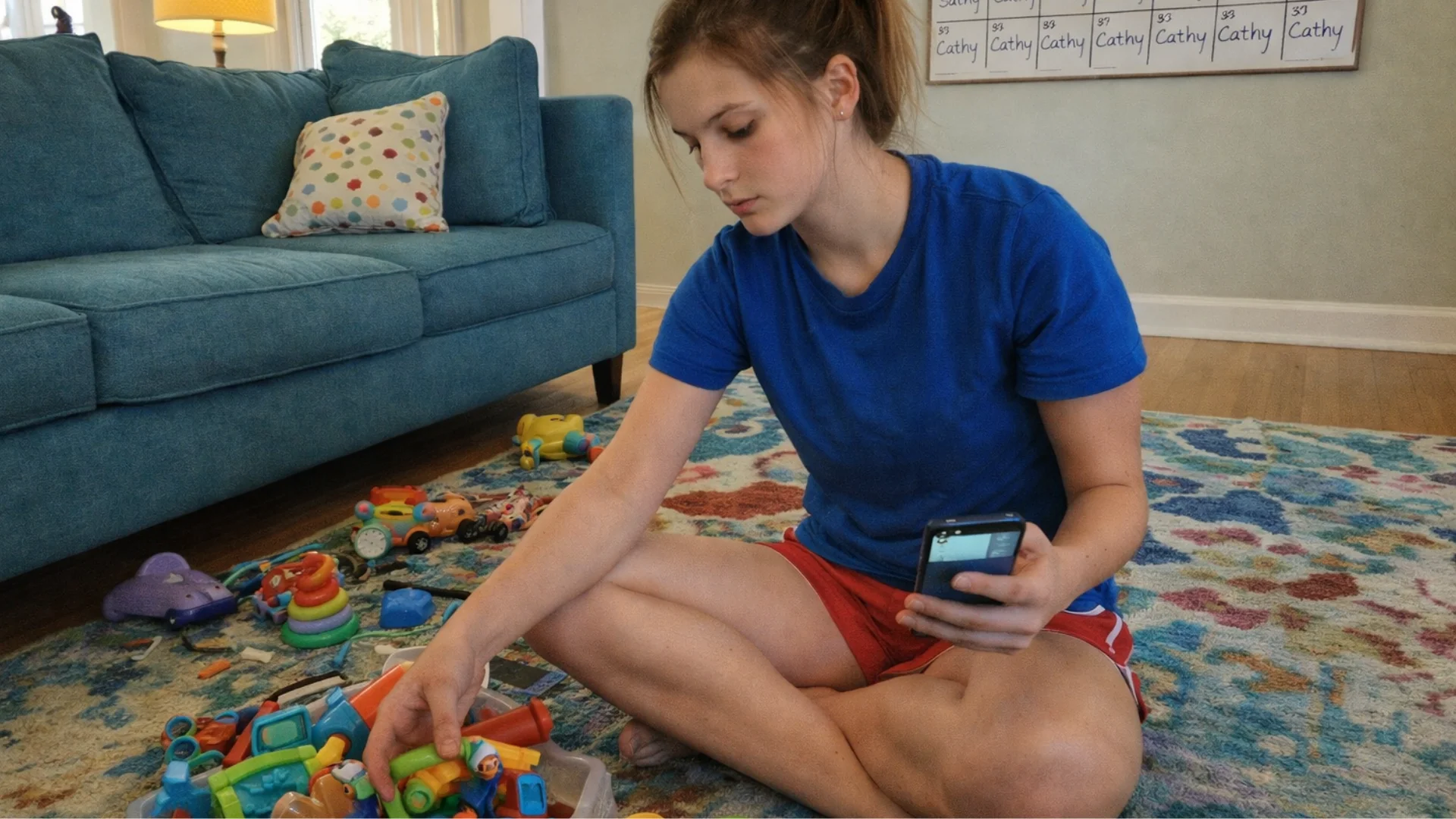
They call it “family.” They call it “responsibility.” They call me “mature” like it’s a compliment, but it’s really a job title they never pay for. My mother changes work shifts without warning. A text appears: late night, weekend, double shift. No question mark. No “can you.” Just an instruction.
My father backs her up with silence. He acts like it’s normal that a 16-year-old runs a toddler’s entire day while trying to keep grades high. I have NO AUTHORITY in the house. I can’t set rules. I can’t decide bedtime. I can’t decide what Eli eats.
I just absorb the tantrums and keep moving. If I push back, I risk losing what little I have—rides, phone access, basic stability. If I don’t push back, I lose my education, my sleep, and my future—one night at a time. My grades start slipping, not because I stopped trying, but because I stopped sleeping.
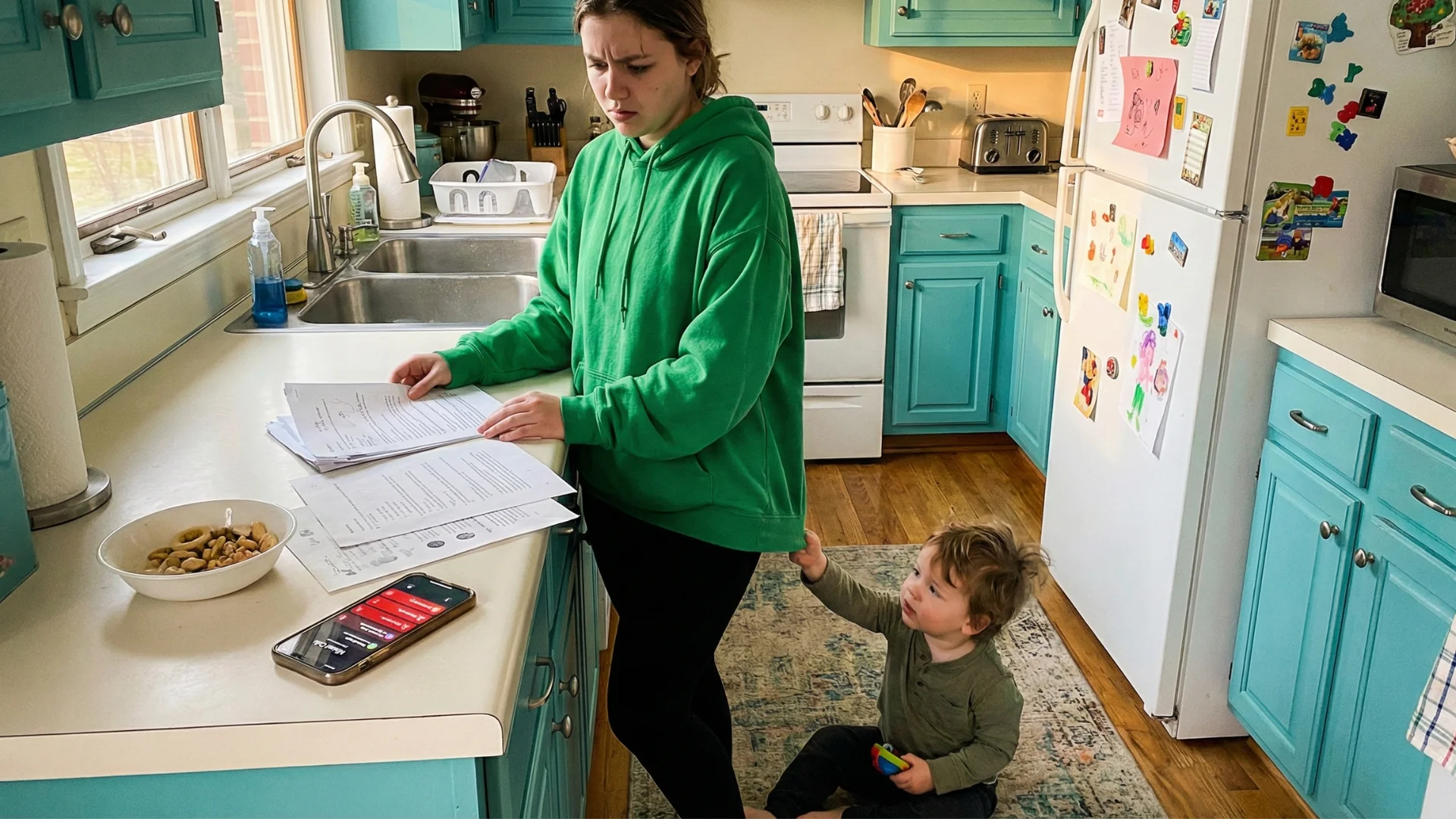
I asked for one thing: a babysitter a couple afternoons a week so I could join an extracurricular. I didn’t demand. I didn’t threaten. I said it like a normal request a teenager should be allowed to make. My mother didn’t pause. “We don’t need one,” she said. “We have you.”
Then she leaned in with the real plan: “And you need to reduce your workload. Those advanced classes keep you away from home.” My father didn’t object. He didn’t even look surprised. That’s when I understood this wasn’t temporary. This was a SYSTEM.
That night she texted me from work: “Eli needs a bath.” “No screens.” “Stop acting like this is a burden.” “You’re lucky you get to live here.” “Talk to your counselor about dropping the advanced track.” All in one thread. All like tasks on a list.
I stared at the screen until my eyes hurt. Because she didn’t just say it. She put it in writing: my school mattered less than their schedule.


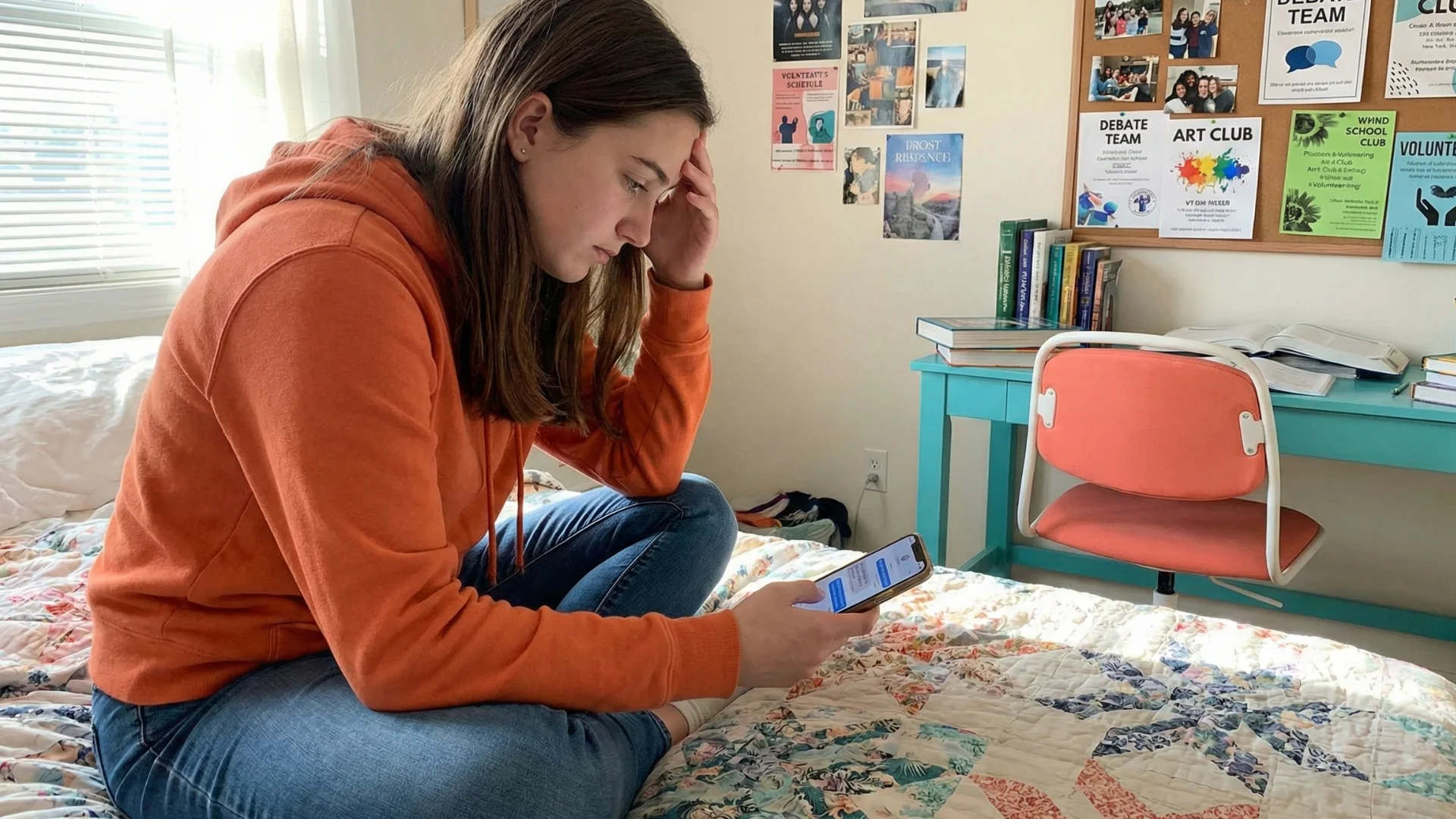
I started logging everything. Wake-up times. Hours alone with Eli. Nights my mom came home after 10. Days my dad left without checking in. Chore lists taped to the fridge. Texts where shifts changed and my time was assumed.
I wasn’t “collecting drama.” I was collecting proof, because I know how adults flip stories. If there’s no record, they act like you imagined it. I took photos of the fridge list. I saved the texts. I wrote dates next to everything.
When I confronted my mother, she didn’t deny the facts. She attacked my tone. “You’re dramatic.” “You’re making problems.” “I’m sorry you feel overwhelmed, but families help.” That apology didn’t touch what she was doing. It just tried to make me feel guilty for noticing. Then she repeated the demand: fewer classes, more home.
I tried my father next. He said, “Your mother is working. Be more understanding.” Not “I see you.” Not “we’ll fix this.” Just: accept it. That sentence was the moment I stopped expecting rescue from inside the house.
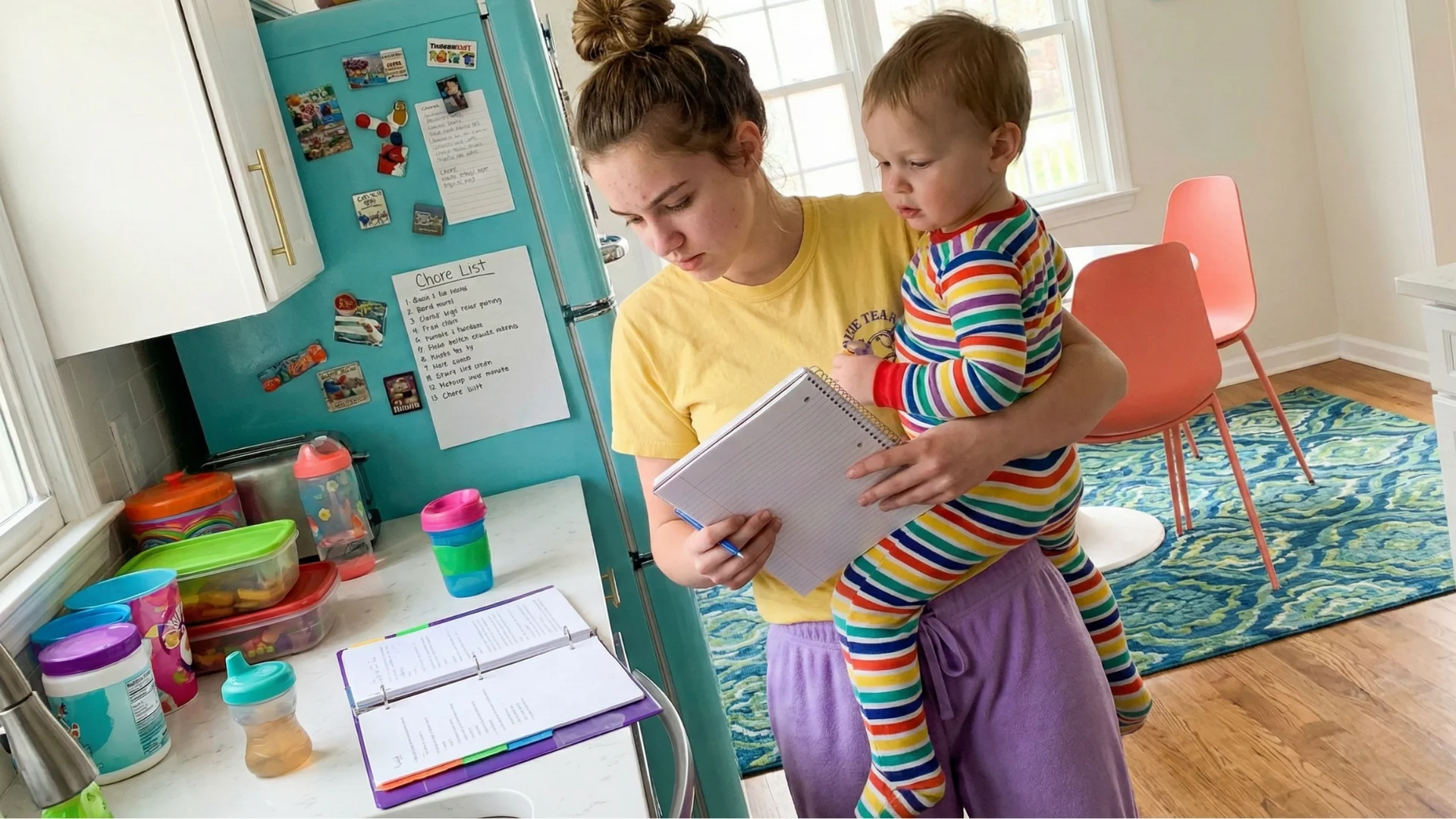
They used “help” as a pressure. My mother would buy me a hoodie or shoes and then bring it up when I resisted. “After everything we do for you.” My father would offer a ride and then remind me who controlled it.
Then my mother said the line she thought would end the conversation: “If you can’t handle being part of this family, you can leave when you’re eighteen.” Like I was just counting down to expiration. That’s when I decided I wasn’t waiting two more years to get permission to exist.
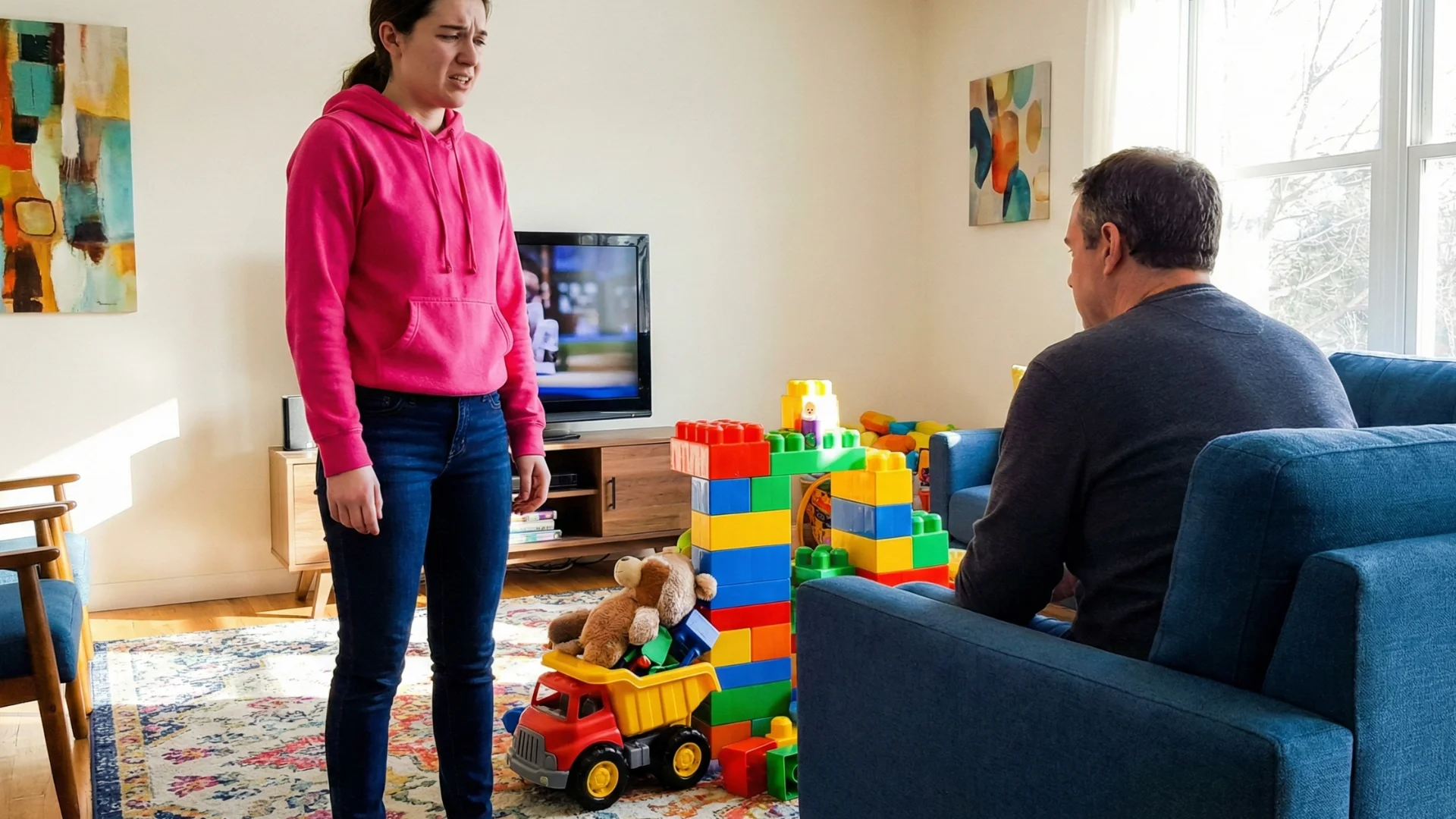
I said it plainly: “I am not Eli’s parent. My mother laughed like I was being cute. My father told me to lower my voice. My mother called me selfish. Then she did the thing she always did when she wanted to win: she placed Eli in my arms and walked away mid-argument.
Like responsibility is a physical object she can hand off. So I did the one thing they didn’t plan for. I left. I waited for a moment when my mother was distracted, grabbed my backpack, charger, and the folder with my school papers, and walked out the front door.
You can see this in Timeless Love, where choosing yourself over inherited obligation isn’t rebellion — it’s survival, and the hardest love story is the one where you reclaim your own future.
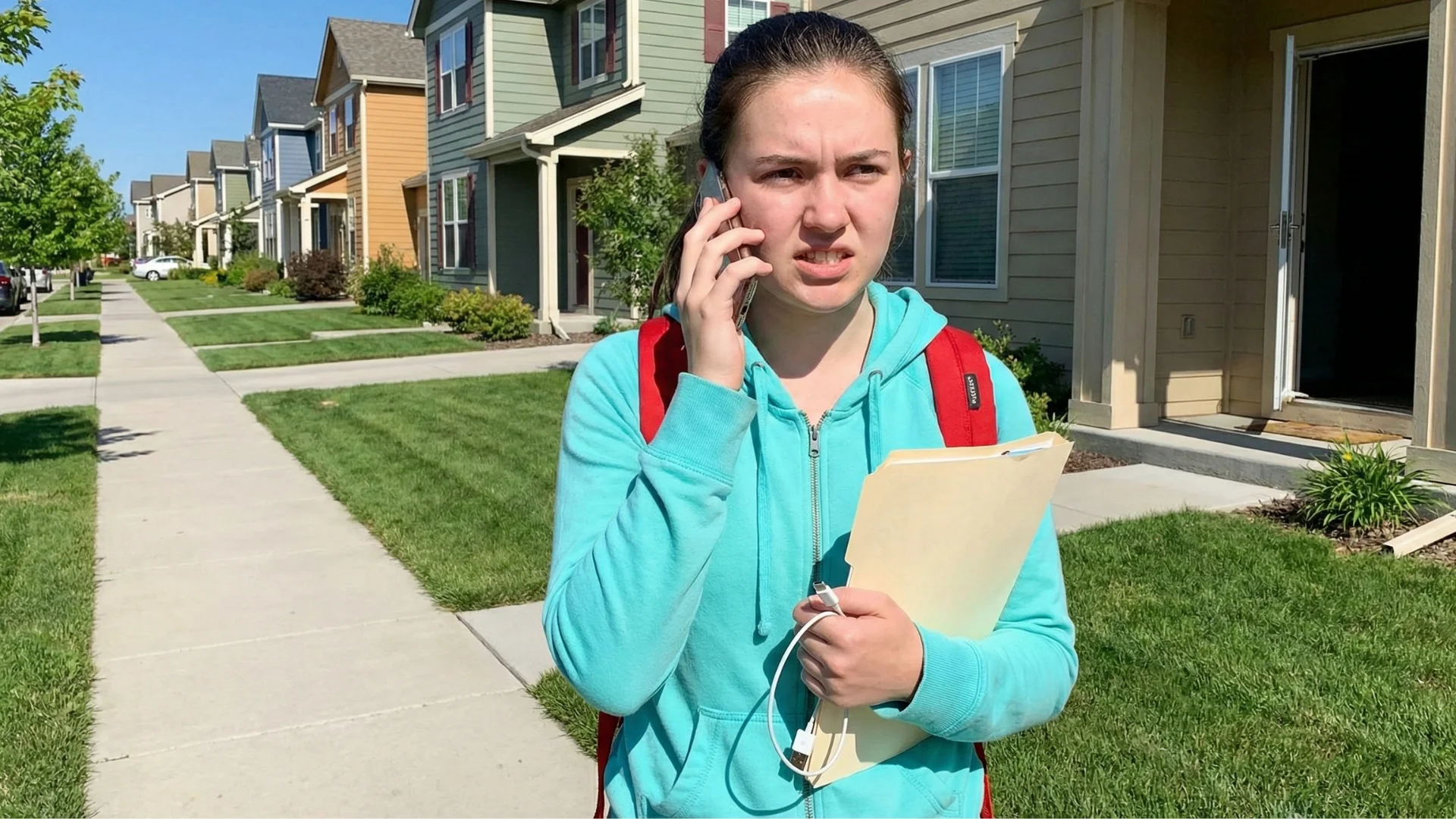
I called my grandmother from the sidewalk. I said, “I need you. Now.” She asked where I was and said, “Stay there.” Twenty minutes later, I was in her car. I didn’t explain everything. I didn’t have to. Her first sentence was: “You’re safe.”
My parents blew up my phone. Calls. Texts. Long messages about shame, disrespect, and “breaking the family.” My grandmother blocked them. She set contact rules. She consulted an attorney. And suddenly my parents’ tone changed, because now it wasn’t a family argument. It was LEGAL.

I retrieved my belongings with supervision. Not alone, not trapped back inside. I started sleeping like a normal person. I reconnected with friends. I joined extracurriculars. I had a real birthday party for the first time in years.
My father apologized later—for failing to protect me. My mother blamed me for the breakdown. If your parents treated your time like PROPERTY and your future like OPTIONAL, would you stay until you aged out—or leave the first moment someone offered a safe door out?
Related Posts

The 4-Year Curse: My Son Finally Learned Why I Seemed Like a Strict Karen
My Son Called Me a Karen and Moved Out – 4 Years Later He Learned the Scary Reason I Was So Strict

I Thought My Wife Was Being Unfaithful. Then Her Cancer Doctor Called.
I Filed for Divorce After Finding Hotel Receipts and a Secret Phone – Then the Oncologist Looked at Me and Said My Partner Was Not Unfaithful, She Was Very Sick

I almost left the man who built my dream house
I Thought My Husband Was Seeing Someone Else for Months After Finding Hotel Receipts and Missing Money – When I Was Ready to Leave Him, He Took Me to a House I Never Knew Existed

My Wife Has Given a Dollar to Every Homeless Person She's Ever Passed — Last Week, a Lawyer Knocked on Our Door and Said She'd Inherited a Stranger's Entire Estate
Last Tuesday evening a lawyer stood on my porch and told me my wife of eleven years had just inherited an entire estate from a man who had passed away, someone we had never heard of. For one terrifying second I thought it was a scam, or worse — some kind of lawsuit we couldn’t afford. Then he said the man’s name: Walter Fitch. And my wife Renee started crying before she even opened the letter.