

My Former Wife Removed Our Child from His Own Home - and Told Me I Had No Say Because I “Didn’t Live There.”
The call came late on Jason's birthday. Other kids were sleeping in his room. Their beds were there. His wasn't. His things were gone from the house.
The call came late on the night of Jason’s birthday. There were voices in the background. Multiple adults. Kids laughing somewhere off the line. Jason didn’t start by crying. He asked if I could come get him. Not tomorrow. Not after the weekend. That night. He said other kids were sleeping in his room.
Their beds were there. His wasn’t. He said his things were gone from the house. I stayed on the line and let him finish explaining. I lost my leg during active duty in the U.S. Army. I returned home medically cleared for civilian life.
The injury didn’t end my marriage overnight, but it changed how I was seen inside it. Laura became distant, then explicit. She said she no longer saw me as a man. She filed for divorce soon after. The divorce itself was uncomplicated. Laura kept the house, citing stability and proximity to Jason’s school.
I moved into a rental and followed the custody agreement exactly. Jason came to me every weekend. He slept in the same room. His clothes stayed where he left them. His routines didn’t change. Laura began a new relationship. I wasn’t informed when the man moved in. Jason wasn’t consulted.
The household changed without discussion. Not long after, his children were added to that house. When I asked why Jason no longer had a bedroom, Laura’s response made me feel sick…. After the divorce, I treated the custody agreement as fixed structure. I arrived on time. I left on time.
I avoided conflict during exchanges. Laura framed herself as practical. Her partner framed himself as a provider. The language used was stability, cooperation, blending families. I didn’t own property.
I didn’t have extra bedrooms. What I had was predictability for Jason. If I objected, I risked being labeled disruptive. If I stayed silent, the changes would become permanent by default.

Jason began arriving with fewer belongings. His backpack stayed zipped. He asked permission before sitting on the couch or using the kitchen. He stopped treating the house as his own. Those behaviors started only after the new household formed.
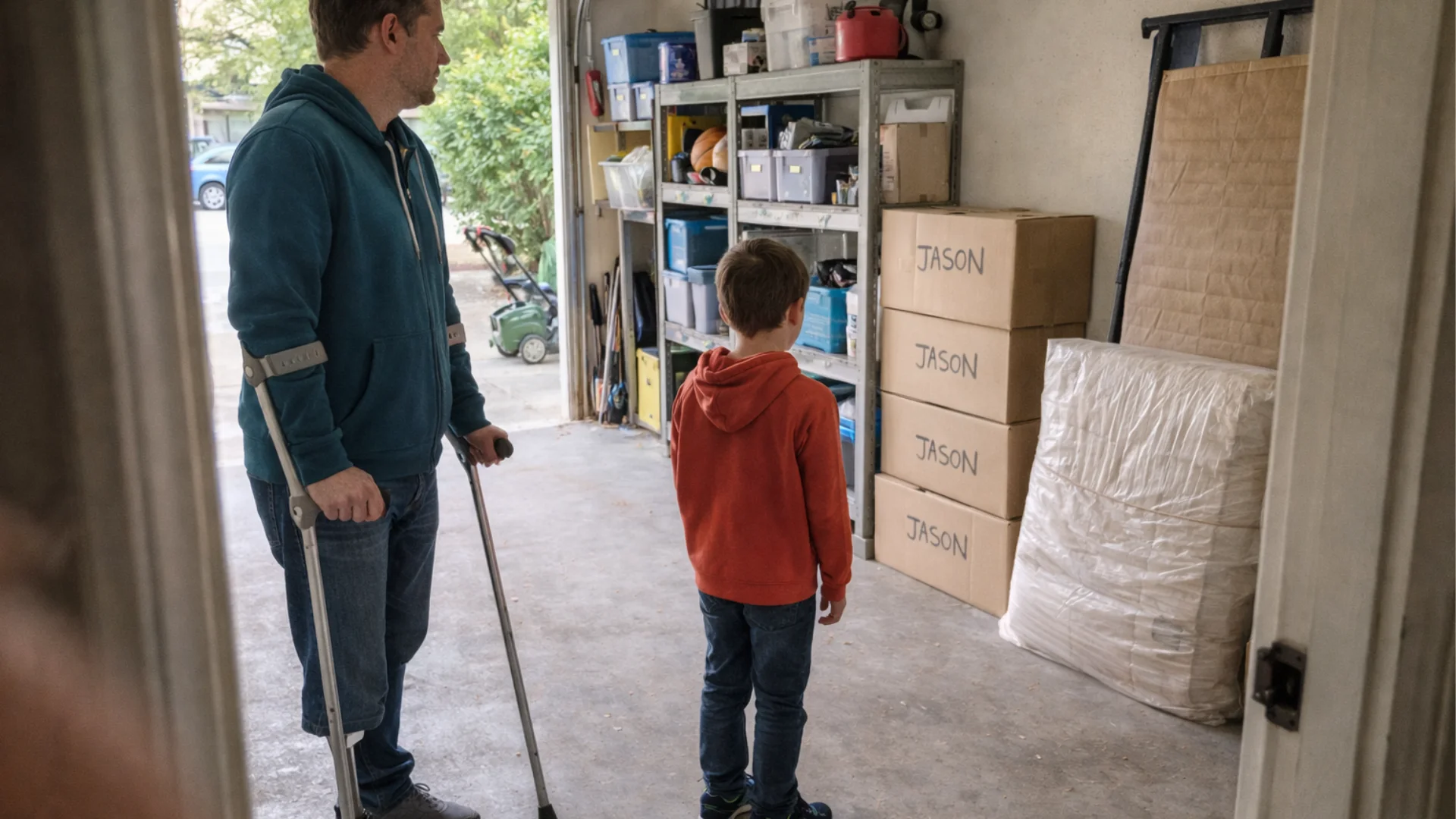
After his birthday, Jason explained the changes in sequence. He came home and found his room already reassigned. Two beds belonging to other children were in place. His bed was gone. His clothes, books, and school supplies had been packed into boxes and moved to the garage. No one warned him.
No one asked him. The change had been completed without explanation. When he objected, he was told to adjust. I contacted Laura and asked why Jason no longer had a bedroom.


Her reply arrived shortly after: “This is temporary. He needs to adjust to the new family. Evan’s kids need space. You don’t live here and you don’t provide for this, so don’t turn this into drama.”

I had to sit down because my balance shifted. The message didn’t include a timeline or solution. It established hierarchy. I started documenting.
Messages where Jason asked if he could keep clothes at my place because his were “in the way.” Dates when his bed was removed. Photos of boxes stacked next to lawn equipment in the garage. Notes explaining why Jason avoided reacting inside the house. Everything was saved, dated, and organized.

Laura said I was overreacting. She said my concern was increasing tension for Jason. She apologized for “how it came across” and repeated that blending families required flexibility. Each response reframed the decision as reasonable and positioned my objection as the problem. Her family contacted me directly over the next few days.
The messages followed the same pattern. Different senders. Identical framing. I was told I was interfering with a household that wasn’t mine. I was told Jason should be grateful to be included rather than “making things harder.” I was told blending families always came with discomfort and that my objections were creating unnecessary tension.
One message explained that children don’t always get their own rooms and that learning to share was “part of growing up.” Another suggested that my involvement was confusing Jason and preventing him from adjusting. None of them asked where Jason was sleeping.

No one acknowledged that his bed had been removed. No one questioned why his belongings were stored in a garage. No one addressed why a child was expected to adapt to changes he wasn’t warned about. The concern expressed wasn’t about Jason’s stability or well-being. It was about keeping the household calm and the adults unchallenged.
The absence of those questions clarified where loyalty had settled. Laura’s partner contacted me directly. He suggested cooperation. He implied access to Jason depended on keeping matters private. Help was framed as conditional. Silence was framed as maturity. That clarified the structure. This wasn’t about adjustment. It was about control.
You can see this in the series Unholy Vows, where what’s framed as adjustment is really about control inside a broken family structure.
At the next exchange, Jason exited the house carrying bags instead of boxes. I asked where his bed was. Laura told me not to start an argument. Her partner commented on my leg and said I wasn’t at the right level for a house like that.
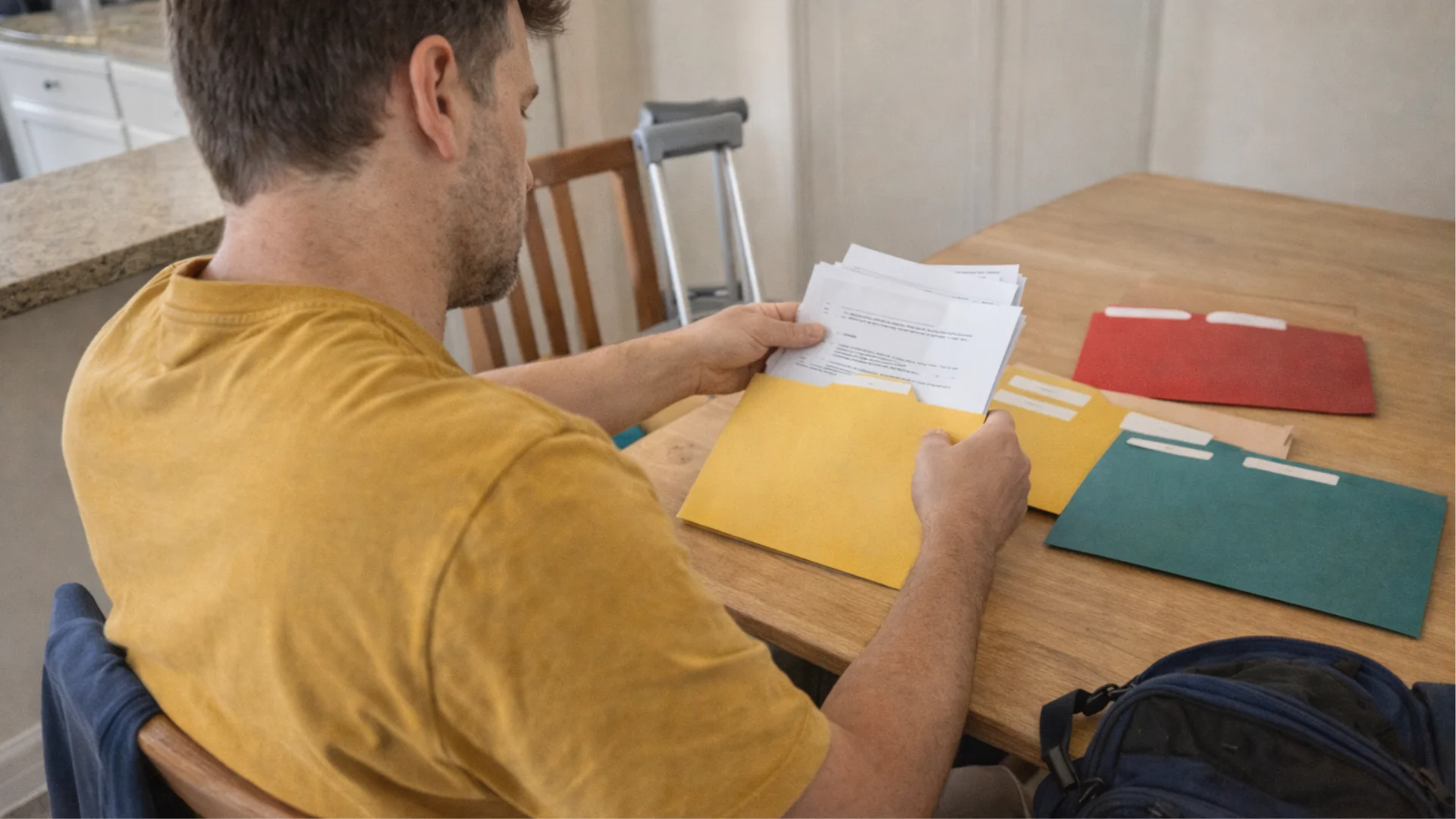
I didn’t argue. I outlined what I had documented: messages, photos, dates, and Jason’s statements. I said I was filing for emergency custody and contacting the school counselor. Laura stopped speaking. Her partner stepped forward. I told him the decision wasn’t his.
I wasn’t asking for approval. I initiated a process that couldn’t be undone quietly. Two days later, Laura said she didn’t want a dispute. She agreed to transfer custody without a hearing. The explanation was minimal. The urgency was new. Housing remains temporary. Legal paperwork covers the table. Scheduling now includes school coordination and documentation.
Jason asks whether he will be required to return. I don’t offer assurances outside my control. If you were in my position, would you force this into full public review and accept the risk—or take the quiet transfer, knowing silence is what allowed another man’s children to take your son’s place in his own home?
Related Posts

The 4-Year Curse: My Son Finally Learned Why I Seemed Like a Strict Karen
My Son Called Me a Karen and Moved Out – 4 Years Later He Learned the Scary Reason I Was So Strict

I Thought My Wife Was Being Unfaithful. Then Her Cancer Doctor Called.
I Filed for Divorce After Finding Hotel Receipts and a Secret Phone – Then the Oncologist Looked at Me and Said My Partner Was Not Unfaithful, She Was Very Sick

I almost left the man who built my dream house
I Thought My Husband Was Seeing Someone Else for Months After Finding Hotel Receipts and Missing Money – When I Was Ready to Leave Him, He Took Me to a House I Never Knew Existed

My Wife Has Given a Dollar to Every Homeless Person She's Ever Passed — Last Week, a Lawyer Knocked on Our Door and Said She'd Inherited a Stranger's Entire Estate
Last Tuesday evening a lawyer stood on my porch and told me my wife of eleven years had just inherited an entire estate from a man who had passed away, someone we had never heard of. For one terrifying second I thought it was a scam, or worse — some kind of lawsuit we couldn’t afford. Then he said the man’s name: Walter Fitch. And my wife Renee started crying before she even opened the letter.