

My Mom Disappeared for a Year Claiming Cancer Treatment - Then Decades Later a Stranger Messaged Me Saying She Had Secretly Given Birth During That Time.
I saw the Facebook message request at 6:18 a.m., half awake and still scrolling on autopilot. Noah Moretti. Profile picture: a face that looked like someone pulled features straight out of my mother’s family album. My first thought wasn’t shock. It was scam. Because I’m 42. I’ve seen the messages. Fake relatives. Fake emergencies. People fishing for sympathy money.
His first line didn’t sound emotional or polite. “I believe Diane Carter is my mother. I was born in 2000. I need you to stop pretending I don’t exist.” That phrasing didn’t sound like someone asking for help. It sounded like someone stating a problem that had already existed for years.
I screenshotted it and sent it to my sister with one sentence: “Either this is a money trick…or something is very wrong.” Then I opened my calendar and counted backward to the year my mom disappeared for cancer treatment. I’m 36 now. I don’t react fast without checking patterns first.
When I was growing up, my mother, Diane Carter, built her identity around reliability. Church volunteer. Community organizer. Family anchor. My grandmother, Rose Bennett, reinforced everything she said like a permanent character witness. In 1999, Diane announced she needed long-term cancer treatment out of town.
We were told visits would interrupt recovery. We were told updates would stay limited. We were told to trust the process. My father, Mark Carter, kept our house functional while she was gone. We adjusted routines. We didn’t push for details because illness was treated as a boundary nobody crossed.
Now a stranger was saying that entire year had a second storyline. Before I responded to Noah, another message appeared—from a man named Ryan Moretti—and he sent screenshots immediately.
Inside our family, Diane’s cancer treatment story was treated as untouchable fact. She “needed extended care.” She “couldn’t manage stress.” She “had to remain private.” Rose repeated those phrases every time someone asked for specifics. She acted like Diane’s medical gatekeeper and emotional translator.
Mark never contradicted her story in front of us. He managed daily logistics and kept the house moving. If he had doubts, he buried them in responsibility. When Diane returned home, the house treated it like a recovery miracle. Church meals. Sympathy calls. Quiet admiration for her “strength.”
That illness story didn’t just protect Diane. It shaped how our entire family understood loyalty, trust, and truth. If that story collapsed, it meant we’d built twenty years of family memory on something staged. Even then, details stayed vague. No consistent treatment location. No medical documentation anyone ever referenced. Just “privacy” and Rose shutting down questions.
After Noah’s message, I stopped assuming scam and started auditing facts. I compared Noah’s birth year to Diane’s cancer treatment timeline. They overlapped perfectly. Then Ryan’s message arrived.


Ryan wrote: “Your mother stayed with me while she was pregnant. The cancer treatment story covered it.” Then he attached archived chat screenshots with timestamps. One message from Diane read: “My mom is helping maintain the illness story.
Mark can’t know.” Another: “If you don’t cooperate, I’ll still find a way to present this as my husband’s child.” Ryan answered in the thread: “I’m not letting someone else claim him.” I didn’t react dramatically. I opened storage boxes. Old calendars. Photo albums. Anything that gave me fixed dates. Because panic doesn’t build evidence.
I built a timeline across three sources: Diane’s disappearance period. Noah’s birth records. Ryan’s message timestamps. Everything aligned. Then I evaluated Rose’s involvement.
Rose didn’t just support Diane emotionally. She enforced the cancer treatment cover story. She filtered updates. She blocked visits. She monitored what information reached the rest of us. I texted Rose directly: “Who is Noah Moretti, born 2000, and why is he contacting me?” She called within minutes. She didn’t answer the question.
Rose said I was “turning private history into accusations.” Then Diane texted: “I’m sorry this hurts you, but you don’t understand what I went through. Don’t destroy the family over misunderstandings.” She didn’t deny Noah. She framed my investigation as betrayal.
Diane started messaging me. “Your mother sacrificed so much.” “You’re reopening old wounds.” “This is nobody else’s business.” Nobody asked whether Diane fabricated cancer treatment. Nobody asked whether Ryan’s screenshots were authentic. The focus stayed on protecting Diane’s reputation.
Diane shifted tactics. She offered financial help. Mortgage support. School expense help for my children. Framed as reconciliation support. Then the messaging hardened: “If you continue this, you’ll damage your father.” Rose reinforced it: “If you expose this, you risk losing family relationships permanently.” That clarified the structure. This wasn’t emotional damage control. This was reputation containment.
I met Mark privately. I showed him Ryan’s screenshots. Noah’s messages. Timeline comparisons. Diane’s own statements. Mark read everything without interrupting. Then he asked: “Rose knew the entire time?” I said yes. He didn’t raise his voice. He didn’t argue. He closed the laptop and sat still for almost a minute.
Mark filed for divorce. Immediately. When Diane tried to confront him, he didn’t engage. He walked past her like she wasn’t part of the conversation anymore. Diane called me minutes later. “You’re responsible for this.” I stopped negotiating. I stopped trying to preserve her version of reality.
You can see this in Bride Under Arrest, where emotion is set aside and documentation becomes the only weapon strong enough to challenge a protected authority figure.
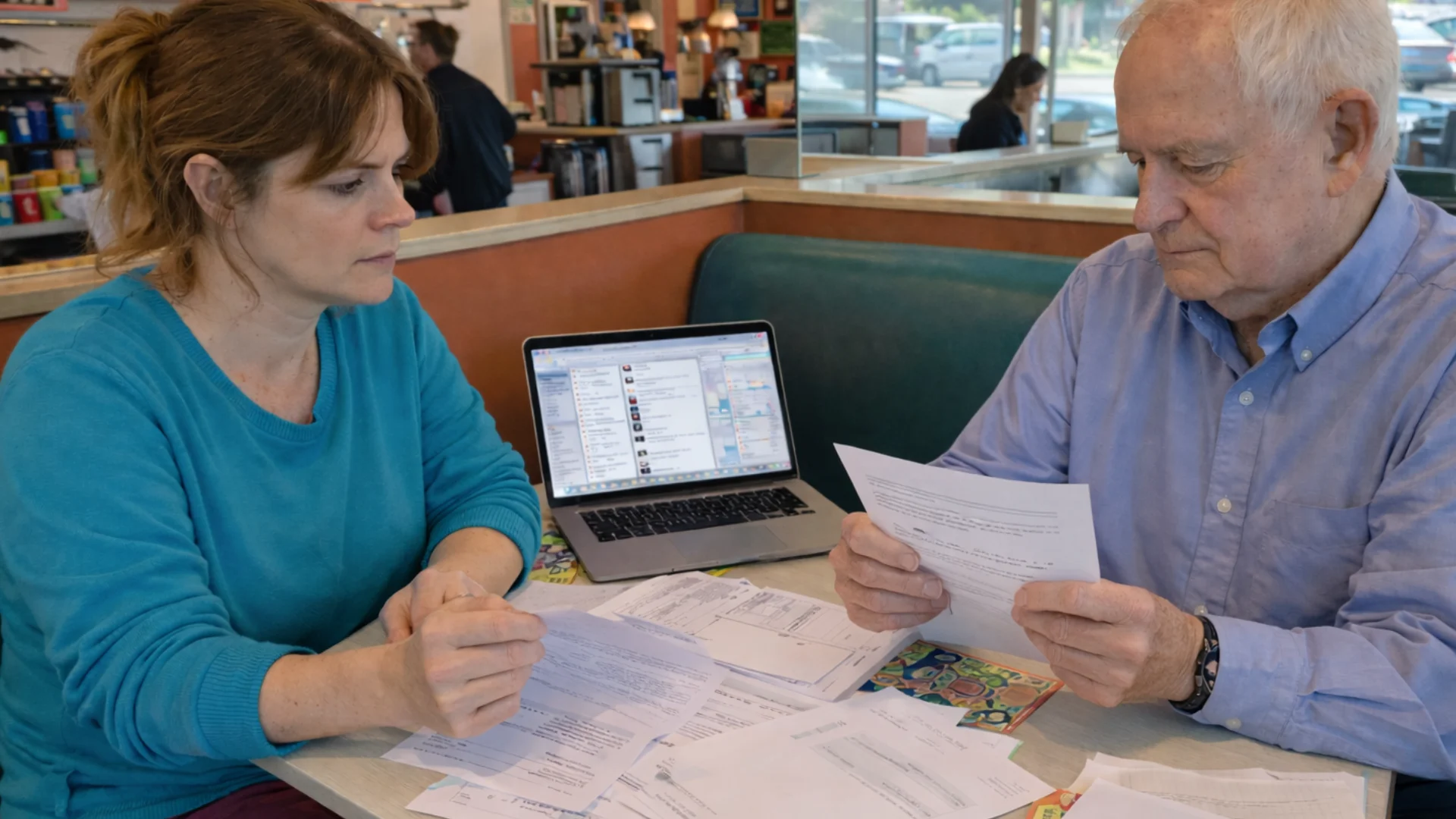
The family fractured in predictable directions. Some relatives severed contact with Diane. Others defended her harder than before. I cut contact completely. Not out of anger. Out of pattern recognition. Mark’s divorce turned twenty years of history into documented statements and timelines.
Noah stayed present. He kept asking questions about the years he was hidden. Questions nobody else wanted to answer. I still replay one detail. If Ryan had agreed to Diane’s plan… would she have returned from “cancer treatment” with a baby and a story nobody questioned?
If you discovered your mother fabricated a cancer treatment disappearance, your grandmother maintained the cover story, and a hidden sibling appeared decades later with documented proof…Do you expose everything and dismantle the family structure…or stay silent to protect the people who protected the lie?
Related Posts

The 4-Year Curse: My Son Finally Learned Why I Seemed Like a Strict Karen
My Son Called Me a Karen and Moved Out – 4 Years Later He Learned the Scary Reason I Was So Strict

I Thought My Wife Was Being Unfaithful. Then Her Cancer Doctor Called.
I Filed for Divorce After Finding Hotel Receipts and a Secret Phone – Then the Oncologist Looked at Me and Said My Partner Was Not Unfaithful, She Was Very Sick

I almost left the man who built my dream house
I Thought My Husband Was Seeing Someone Else for Months After Finding Hotel Receipts and Missing Money – When I Was Ready to Leave Him, He Took Me to a House I Never Knew Existed

My Wife Has Given a Dollar to Every Homeless Person She's Ever Passed — Last Week, a Lawyer Knocked on Our Door and Said She'd Inherited a Stranger's Entire Estate
Last Tuesday evening a lawyer stood on my porch and told me my wife of eleven years had just inherited an entire estate from a man who had passed away, someone we had never heard of. For one terrifying second I thought it was a scam, or worse — some kind of lawsuit we couldn’t afford. Then he said the man’s name: Walter Fitch. And my wife Renee started crying before she even opened the letter.