

My Parents Never Threw Anything Away - and by Sixteen, Doctors Said I Couldn’t Be Sent Home.
Not broken items. Not expired food. Not empty containers. Not trash. Both of my parents collected everything. My mom kept items because she believed they carried memory and meaning. My dad kept items because he believed throwing things away was risky. Together, they created a system where EVERY OBJECT STAYED.
From the street, our house looked completely normal. Fresh paint. A clean lawn. Nothing that would make anyone stop and look twice. But the front door only opened about seven inches.
To get inside, you had to turn sideways and squeeze past stacks of old newspapers, plastic containers, and random boxes piled almost to the ceiling. The air inside didn’t smell like a home. It smelled like dust and old cardboard.
I was twelve when my homeroom teacher, Mr. Henderson, kept me after school one day. He didn’t ask about homework or grades. He just watched me standing there long after the last bell, slowly packing my backpack like I was trying to make the moment last.
“School closes in twenty minutes, Emma,” he said. “Why are you always the last one here? Don’t you want to go home?”
I didn’t know what to say. I couldn’t tell him my bed had disappeared under piles of my dad’s “useful things” and my mom’s “memories.” I couldn’t tell him my room had been taken over by stacks of broken electronics and boxes months earlier.
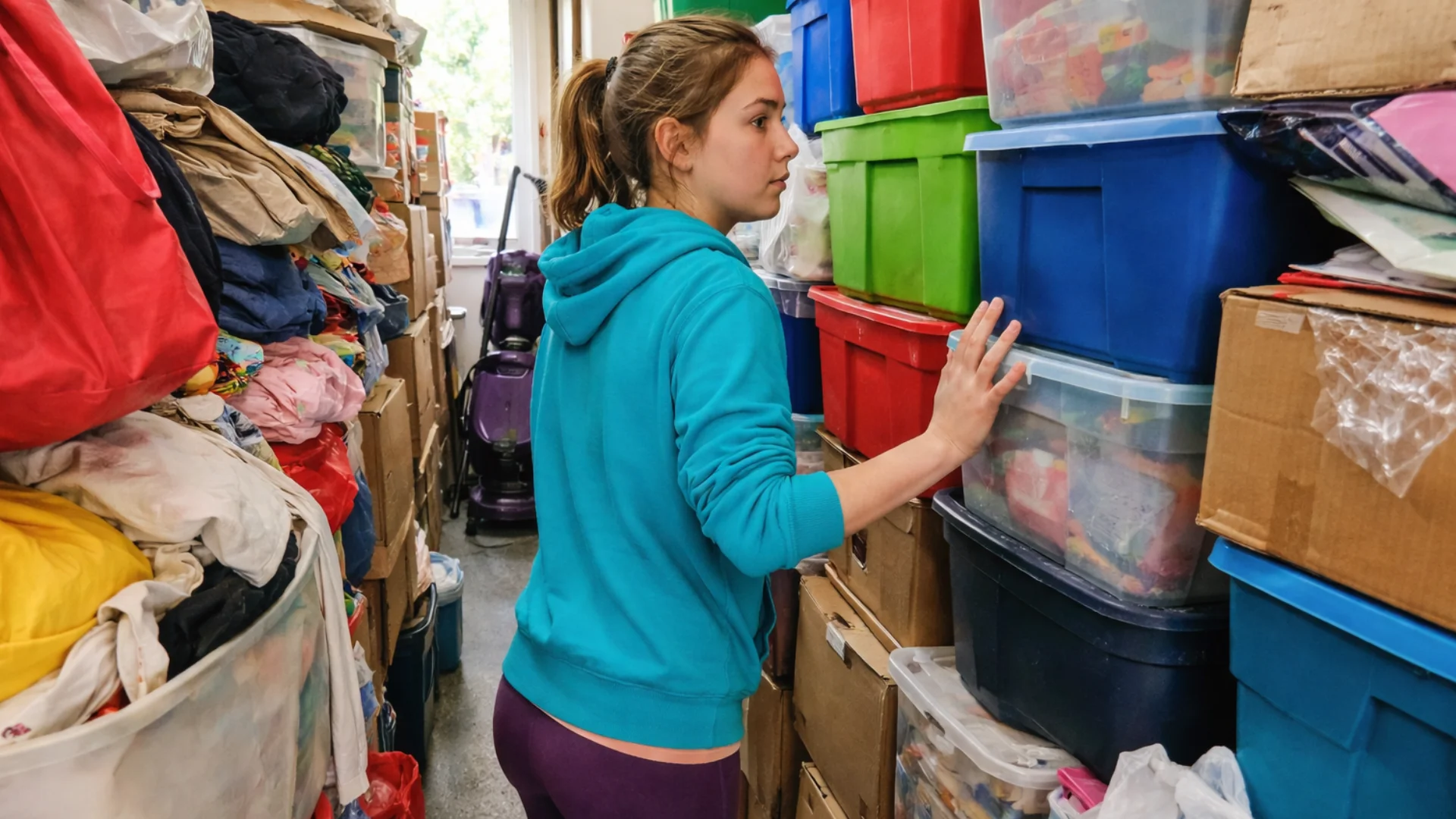
Most nights I slept on old coats in the hallway. I thought staying quiet was protecting my parents. I thought I could keep pretending everything was normal. That worked for a while. Until the night the ceiling finally gave way under the weight of everything they refused to throw away.
My parents never argued about the clutter. They actually supported each other. My mom kept everything because it “held memories.” Yogurt cups, old school papers, empty containers. My dad kept broken tools and appliances because he thought we might need them someday.
So nothing ever left the house. By the time I was ten, the kitchen table had disappeared under piles of mail and electronics. We ate standing in narrow paths through the house because there was nowhere to sit.


If I mentioned throwing something away, my mom would get upset and say those things mattered to her. After a while, I stopped bringing it up. No friends visiting. No sleepovers. Even using the shower meant moving things around first. I mostly stayed quiet and tried not to cause problems.
Everything finally fell apart one night around three in the morning. A pipe upstairs had been leaking for weeks behind a wall of boxes. No one could reach it to fix it. I woke up to a loud crack.Then the ceiling in my room dropped.
Wet magazines, blankets, and pieces of drywall came crashing down right in front of the door.My bed had been buried months earlier, so that night I had been sleeping on the floor near the wall. The debris didn’t hit me, but it blocked the only way out of the room.
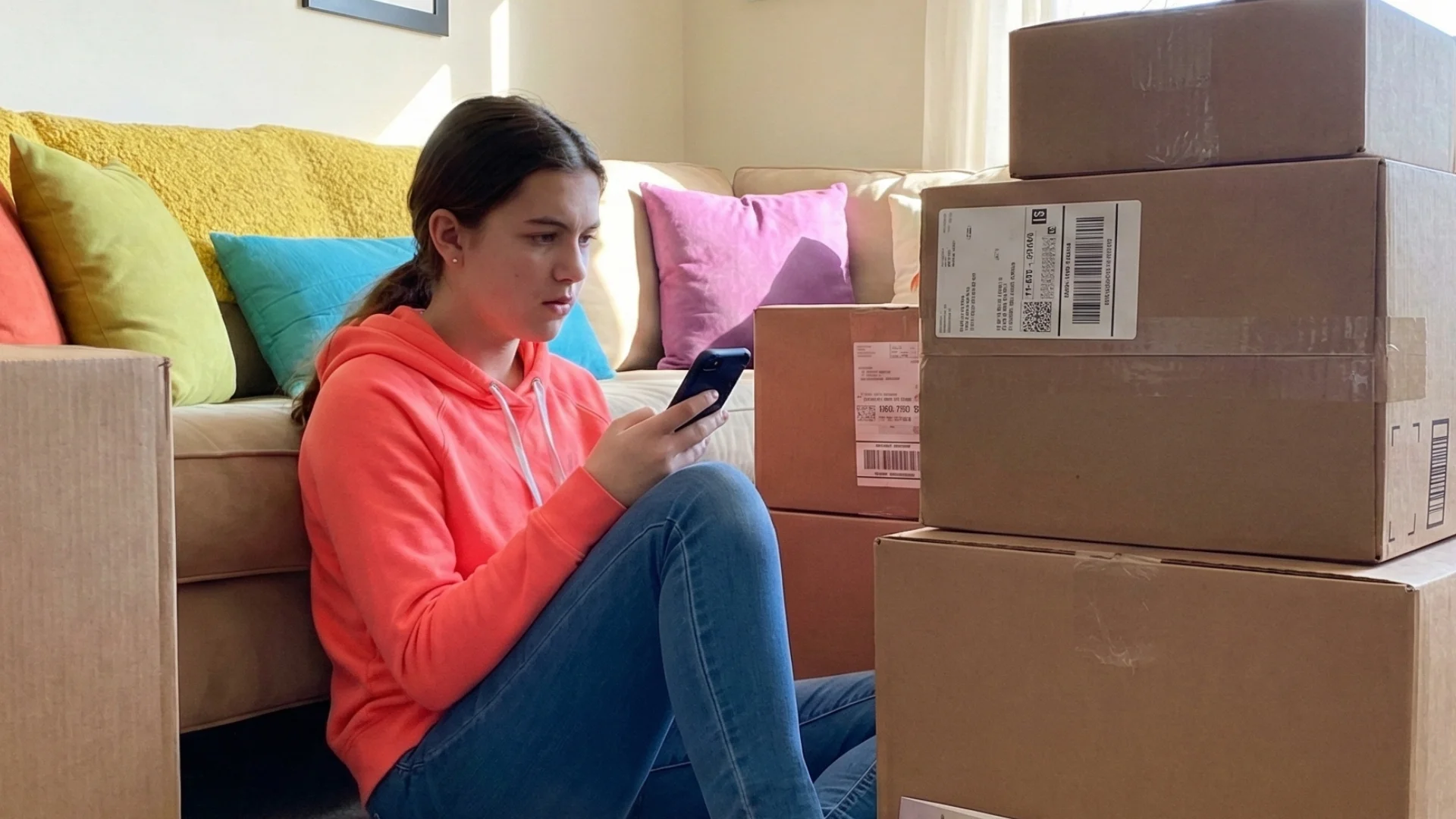
Suddenly I was stuck there in the dark, surrounded by soaked paper and that heavy moldy smell. When emergency workers arrived, they couldn’t open the front door all the way. They had to clear a narrow path through the piles just to reach me.
That was the moment something in my mind shifted. I realized the house wasn’t protecting me. It was keeping me there. After that night, the house was declared unsafe for someone my age to live in. Social services told my parents the situation had to change before I could return.
My parents were given a choice: clear the house or I couldn’t live there. They didn’t clear it. Instead, I moved in with a foster family arranged through social services.
My parents kept saying they would start sorting things out soon and that I’d be able to come home once the house was “under control.” But nothing ever changed. I stayed with that family until I turned eighteen.
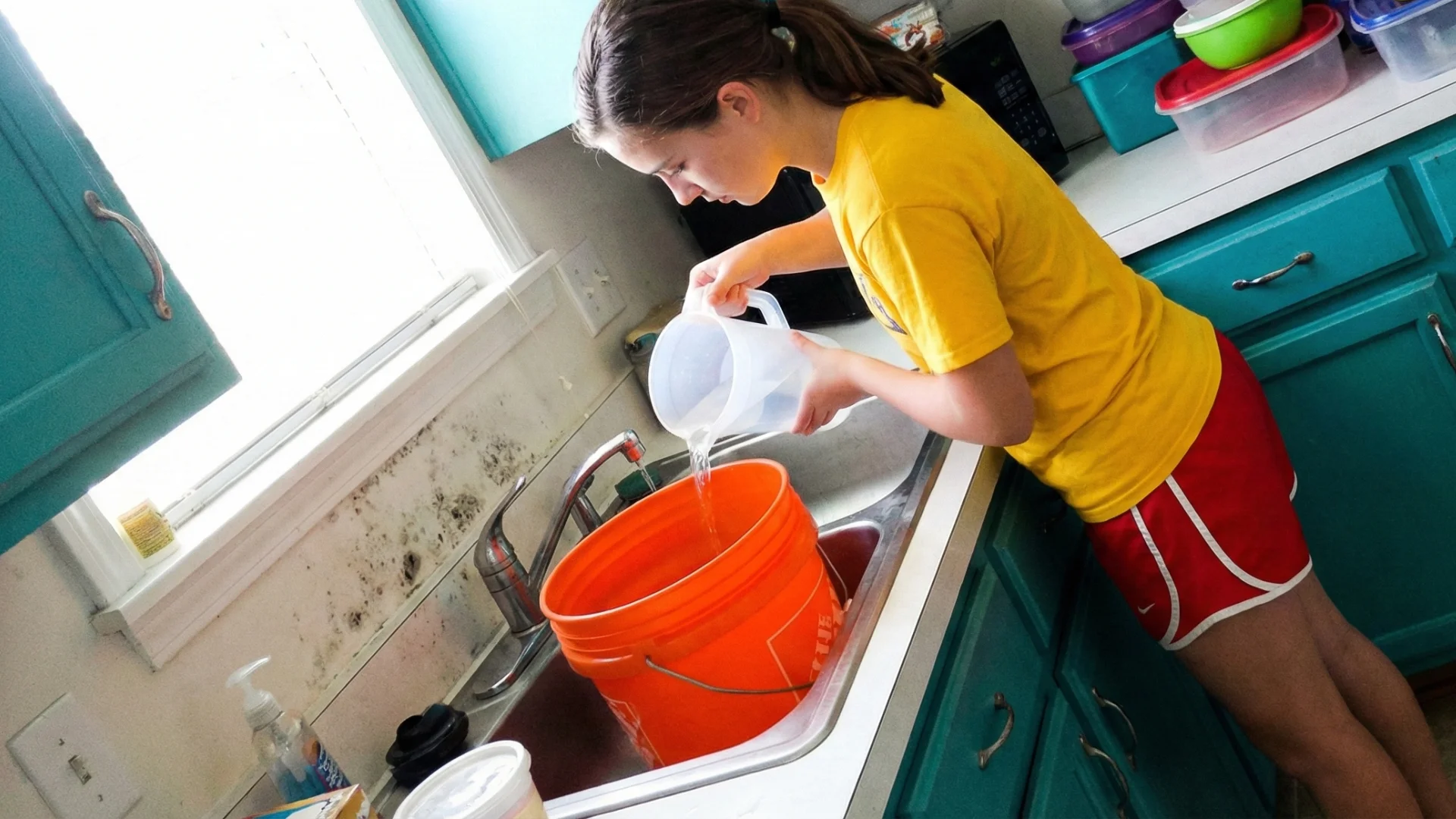
Now I live alone. My apartment is simple. I have four plates and three chairs. I take the trash out every night. If something breaks, I deal with it immediately. I can’t stand the idea of things piling up. My parents still live in that same house.
We haven’t spoken in years. Sometimes I see photos online of the yard, and neighbors still complain about the smell and the rodents. For a long time I thought my parents kept everything because they loved the past.
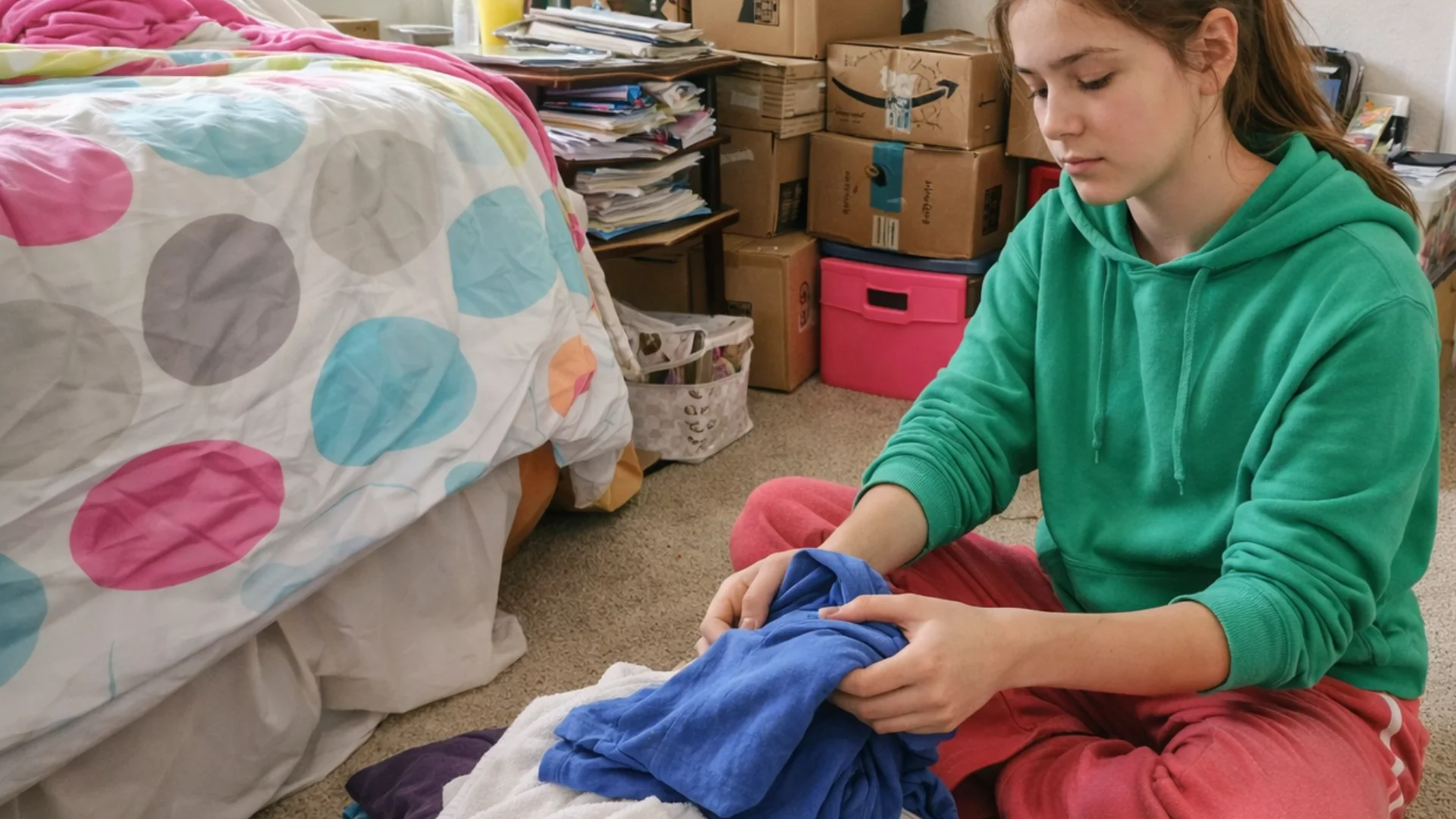
Now I think they were just afraid of the future. I left that house years ago. But sometimes it still feels like I’m sorting through the things it left behind in my mind.
Related Posts

The 4-Year Curse: My Son Finally Learned Why I Seemed Like a Strict Karen
My Son Called Me a Karen and Moved Out – 4 Years Later He Learned the Scary Reason I Was So Strict

I Thought My Wife Was Being Unfaithful. Then Her Cancer Doctor Called.
I Filed for Divorce After Finding Hotel Receipts and a Secret Phone – Then the Oncologist Looked at Me and Said My Partner Was Not Unfaithful, She Was Very Sick

I almost left the man who built my dream house
I Thought My Husband Was Seeing Someone Else for Months After Finding Hotel Receipts and Missing Money – When I Was Ready to Leave Him, He Took Me to a House I Never Knew Existed

My Wife Has Given a Dollar to Every Homeless Person She's Ever Passed — Last Week, a Lawyer Knocked on Our Door and Said She'd Inherited a Stranger's Entire Estate
Last Tuesday evening a lawyer stood on my porch and told me my wife of eleven years had just inherited an entire estate from a man who had passed away, someone we had never heard of. For one terrifying second I thought it was a scam, or worse — some kind of lawsuit we couldn’t afford. Then he said the man’s name: Walter Fitch. And my wife Renee started crying before she even opened the letter.