

My Mother-in-Law and Her Daughter Wore Black to My Wedding, but My Revenge Was Worse.
My name is Meghan. I’m thirty-five years old, and I married my husband, Erik, one week ago. I’m still tired, not from the wedding itself, but from everything that happened around it. The ceremony was beautiful. What made it difficult was what his mother tried to turn it into.
From the beginning of our relationship, Erik’s mother DIDN’T LIKE me. She never said it outright. She never raised her voice. She never INSULTED me directly. Everything she did was subtle and public at the same time.
Small comments. Small setups. Situations where, if I reacted, I looked DRAMATIC. If I stayed quiet, she kept pushing. Erik had spent years explaining her behavior away. He said she was emotional. He said she didn’t mean harm.
He said reacting would only make things worse. I tried to believe him because every single incident, taken alone, was small enough to excuse. But together, they formed a pattern.
The moment I stopped giving her the benefit of the doubt happened at her birthday party last year. I arrived expecting a normal family dinner. When I walked in, I saw Erik sitting next to HIS EX. Not across the room. Not accidentally close. Right next to him. His mother had placed them there.
She introduced the ex to everyone. More than once. She talked about how long they’d known each other. She brought up old memories. She COMPARED stories. She laughed about how “close” they used to be. She kept the attention on them.
People kept glancing at me, waiting to see how I would react. I didn’t react. Later, when I brought it up privately, his mother smiled and said I was imagining things. She said she was just being friendly. Erik asked me to FORGIVE her. He said she wasn’t bad, just misunderstood.
That was when I realized something important. She was trying to make me look like the PROBLEM. After that, I stopped explaining myself to her. I stopped trying to correct the narrative. I stopped asking Erik to intervene every time. I started paying attention instead.
A few weeks before the wedding, I overheard a conversation I wasn’t meant to hear. I was at Erik’s parents’ house, walking past the hallway, when I heard his mother talking to her adult daughter. They weren’t whispering. They weren’t hiding. They sounded CONFIDENT.
They were talking about the wedding. They were talking about what they planned to wear. They said BLACK. Dresses. Shoes. Accessories. Everything. They laughed about it. They said it was symbolic. They called it a FUNERAL. Mourning Erik’s decision.

They talked about arriving together. Sitting where people could see them. Making sure they were photographed. They assumed I would react. Cry. Say something. Cause a scene. They assumed Erik would step in and defend them.


They assumed I would look UNSTABLE on my own wedding day. I didn’t interrupt them. I didn’t confront them. I didn’t tell Erik. Instead, I prepared.
I messaged our photographer privately. I asked for extended family photo time. I asked him to keep shooting continuously during group photos, even if things felt awkward. I didn’t explain why. I just said it was important to me.
I arranged for a couple of novelty accessories to be placed discreetly near the photo area. Nothing extreme. Just playful enough that refusing them would draw attention.
I told my bridesmaids one thing: if I handed them something or asked for help, they were to do it. No questions. That was it. On the wedding day, Erik’s mother and her daughter arrived exactly as planned. Both were dressed in FULL BLACK. People NOTICED immediately.
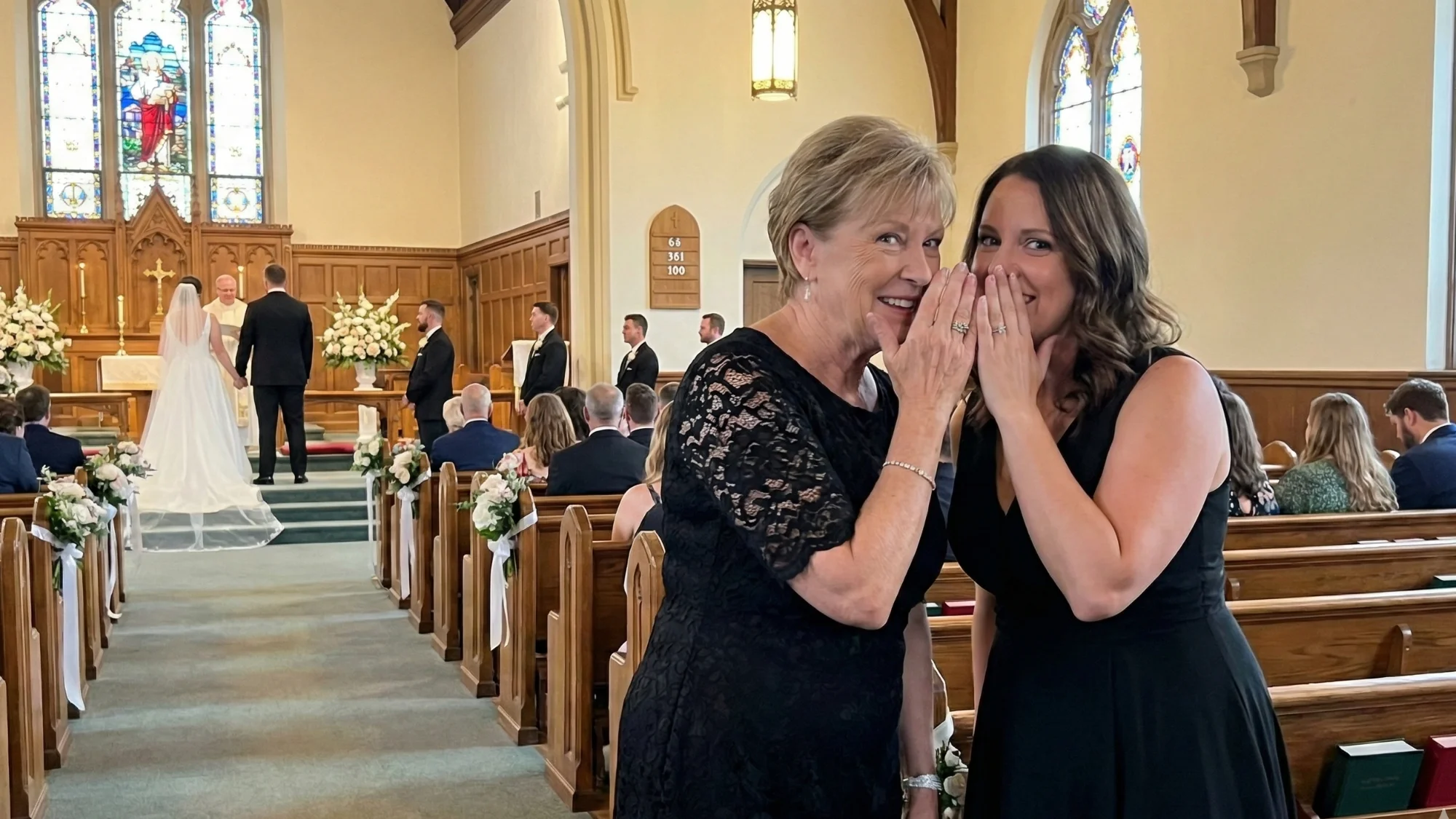
I noticed Erik watching me, waiting for a reaction. I stayed CALM. The ceremony went on. I didn’t flinch. I didn’t whisper. I didn’t pull anyone aside. The longer I stayed composed, the more uncomfortable it seemed to make them.
They kept checking my face, waiting for me to crack. I didn’t. At the reception, his mother positioned herself carefully. She chose a seat where she was visible. She made sure people saw her. She kept glancing toward me, waiting for the moment she could say I OVERREACTED.
The moment never came. Then it was time for family photos. Everyone gathered. That was when I stepped forward.
I grabbed a WITCH HAT and a WITCH NOSE from the table and put them straight on my mother-in-law. On her head. On her face. Right there. While the camera was clicking.
The photographer started shooting immediately. People started to LAUGH. Not politely. Open laughter. The photographer kept shooting. I stayed where I was, smiling, letting the moment stretch.
His mother’s expression changed fast. She tried to remove the accessories. I glanced at the photographer. He kept shooting. She turned and STORMED away. Her heel caught. She lost her balance and FELL in front of everyone. Her dress tore when she hit the ground.
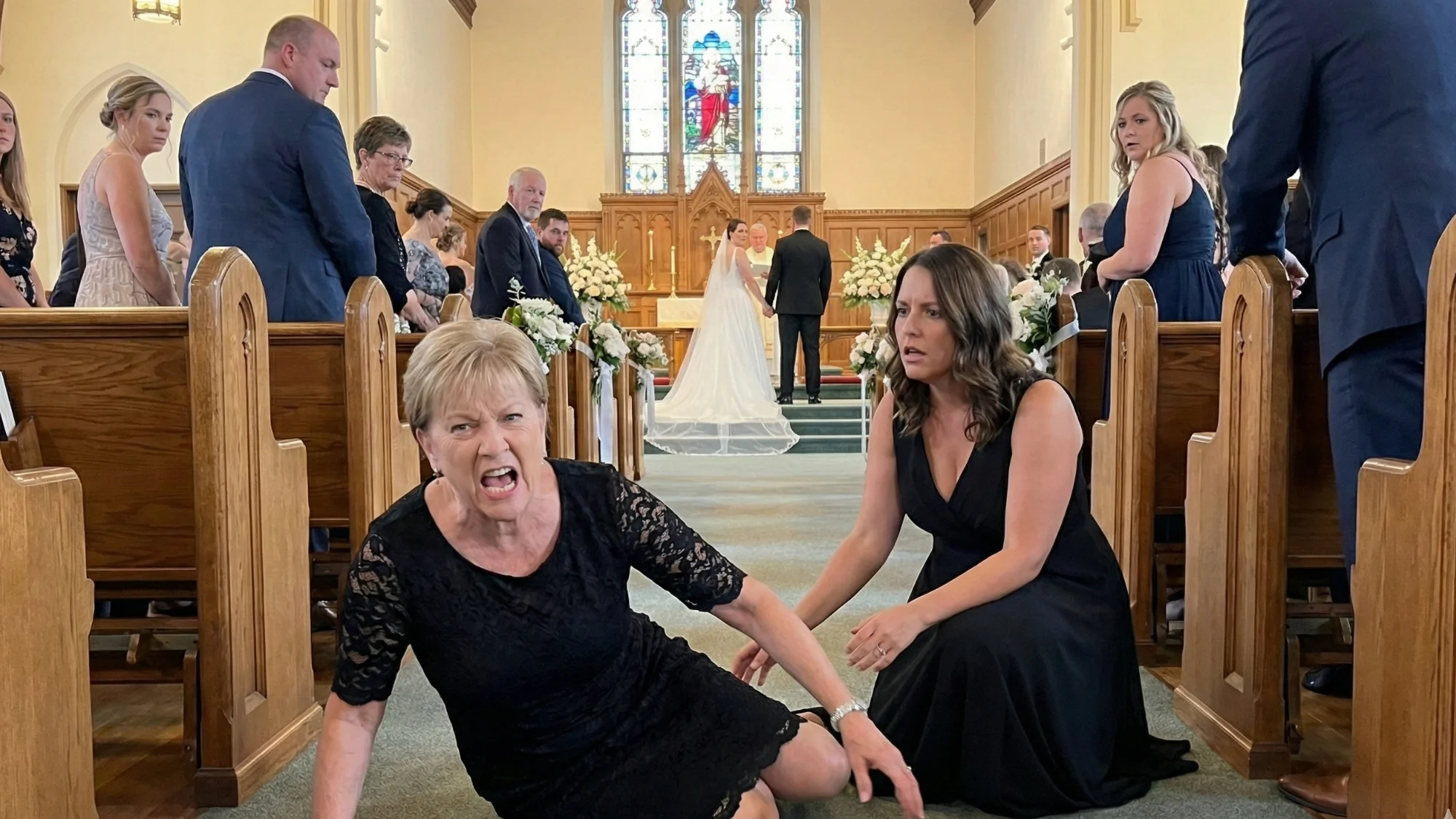
You can see this in Timeless Love, where opposition isn’t loud — it’s ceremonial. Disapproval is dressed in elegance, and the real conflict plays out through symbolism instead of confrontation.
The photographer captured everything. She stood up furious and HUMILIATED. Her daughter rushed to her. They left early. The wedding didn’t stop. Music kept playing. Guests kept dancing. Drinks kept being poured. I didn’t comment. I didn’t apologize. I didn’t explain anything. Everyone had already seen enough.
Over the next few days, the PHOTOS circulated. Family group chats exploded. Relatives messaged Erik asking what had happened. His mother ACCUSED me of humiliating her.
For the first time, Erik didn’t defend her. He saw the pattern clearly, not just from the wedding, but from everything before it. The birthday. The comparisons. The setups. The constant testing.
She never apologized for what she did, so no, I didn’t. Because if someone plans to publicly humiliate you, and you simply let them follow through — then make sure everyone sees it clearly — is that REVENGE?
Or is it just refusing to PROTECT their behavior anymore?
Related Posts

The 4-Year Curse: My Son Finally Learned Why I Seemed Like a Strict Karen
My Son Called Me a Karen and Moved Out – 4 Years Later He Learned the Scary Reason I Was So Strict

I Thought My Wife Was Being Unfaithful. Then Her Cancer Doctor Called.
I Filed for Divorce After Finding Hotel Receipts and a Secret Phone – Then the Oncologist Looked at Me and Said My Partner Was Not Unfaithful, She Was Very Sick

I almost left the man who built my dream house
I Thought My Husband Was Seeing Someone Else for Months After Finding Hotel Receipts and Missing Money – When I Was Ready to Leave Him, He Took Me to a House I Never Knew Existed

My Wife Has Given a Dollar to Every Homeless Person She's Ever Passed — Last Week, a Lawyer Knocked on Our Door and Said She'd Inherited a Stranger's Entire Estate
Last Tuesday evening a lawyer stood on my porch and told me my wife of eleven years had just inherited an entire estate from a man who had passed away, someone we had never heard of. For one terrifying second I thought it was a scam, or worse — some kind of lawsuit we couldn’t afford. Then he said the man’s name: Walter Fitch. And my wife Renee started crying before she even opened the letter.